
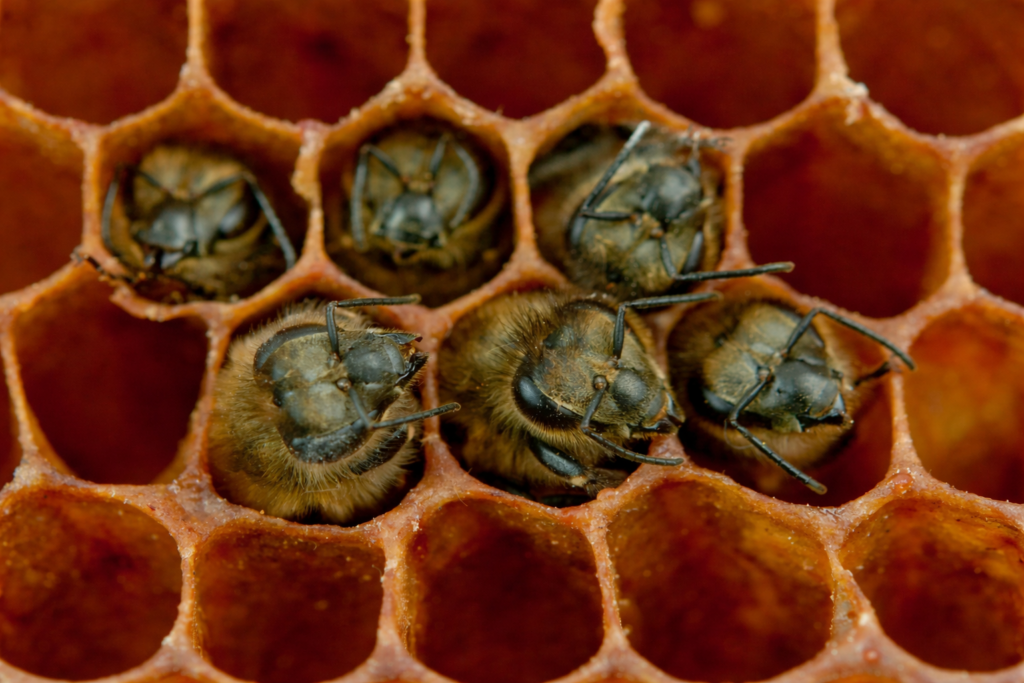
Microbes from the Bee Gut: The Origin of Life Within Honey**
Bees possess a unique and remarkably stable gut microbiome—a microbial community unlike that of humans or other animals. This microbiome is not incidental. It is an evolutionary adaptation that plays a central role in how nectar is transformed into honey and how bees survive within complex ecological systems.
Unlike mammals, bees host a highly specialized and relatively simple microbial consortium, dominated by a small number of bacterial species that have co-evolved with their hosts over millions of years. This stability is precisely what gives the bee gut microbiome its functional power.
Scientific studies have shown that these microbes are essential for several critical processes, including:
- assisting bees in digesting nectar and pollen
- facilitating the biochemical conversion of nectar into honey
- producing key enzymes and metabolites
- protecting bees against pathogens and environmental stressors
These microbial partners are not passive residents. They are active biological agents that shape the very nature of honey itself.
Beyond the Bee: A Biological Partnership
When bees collect nectar from flowers, the nectar is not yet honey. It is a plant-derived liquid rich in sugars but chemically unstable and highly susceptible to microbial spoilage. The transformation from nectar to honey requires more than dehydration or storage—it requires biological processing.
Inside the bee’s digestive system, nectar encounters a microbial ecosystem that has been refined by natural selection. Specific gut bacteria interact with the nectar during digestion and regurgitation, contributing to enzymatic reactions that alter sugar structures, regulate acidity, and influence antimicrobial properties.
In this sense, honey is not simply a product of plants processed by insects. It is the result of a three-way biological collaboration:
- plants provide nectar
- bees act as biological processors
- microbes act as biochemical engineers
This collaboration is what elevates honey from a simple sweetener to a biologically complex substance.
The Role of Microbes in Enzymatic Transformation
One of the defining characteristics of honey is the presence of enzymes such as invertase, glucose oxidase, and diastase. While bees are known to introduce these enzymes, emerging research suggests that microbial activity within the bee gut supports and stabilizes these enzymatic processes.
Microbes help regulate:
- the breakdown of sucrose into glucose and fructose
- the formation of organic acids that lower pH
- the generation of antimicrobial by-products
Without this microbial contribution, nectar would struggle to achieve the chemical stability and longevity that define honey.
Microbial Defense and Honey Stability
The bee gut microbiome also plays a defensive role. Certain gut bacteria inhibit the growth of harmful pathogens, protecting both the bee and the developing honey. This microbial defense mechanism contributes indirectly to honey’s well-known resistance to spoilage and microbial contamination.
In other words, honey’s remarkable shelf stability is not solely a function of low water content—it is also the downstream result of microbial regulation during its formation.
What Happens Without Bee Gut Microbes?
If the microbial component of the bee gut were removed or disrupted, the consequences would be profound:
- nectar would fail to undergo complete biological transformation
- the chemical structure of honey would be unstable
- enzymatic balance would be compromised
- honey would lose its “living” biochemical character
Without these microbes, nectar remains plant juice. It does not become honey in the truest biological sense.
Honey as a Living Outcome
This perspective challenges the conventional view of honey as a static product. Honey is better understood as a biological outcome—the preserved result of microbial, insect, and plant interactions.
Even after harvest, traces of this biological origin remain embedded in honey’s structure. Its enzymes, acids, and bioactive compounds reflect the living processes that created it.
Why This Understanding Matters
Recognizing the role of bee gut microbes reshapes how we think about honey:
- It explains why honey varies so dramatically by region and environment
- It clarifies why excessive processing alters honey’s character
- It reframes honey as part of a microbial continuum, not just a food
This understanding also invites deeper inquiry into how honey interacts with the human gut microbiome, an area of growing scientific interest.
A Biological Legacy Preserved
Honey is not alive in the way organisms are alive—but it carries the biological legacy of life within it. That legacy begins not in the hive, but in the microscopic world inside the bee.
The microbes of the bee gut are the unseen architects of honey. Without them, honey would not exist as we know it.
This is where the life within honey truly originates.