
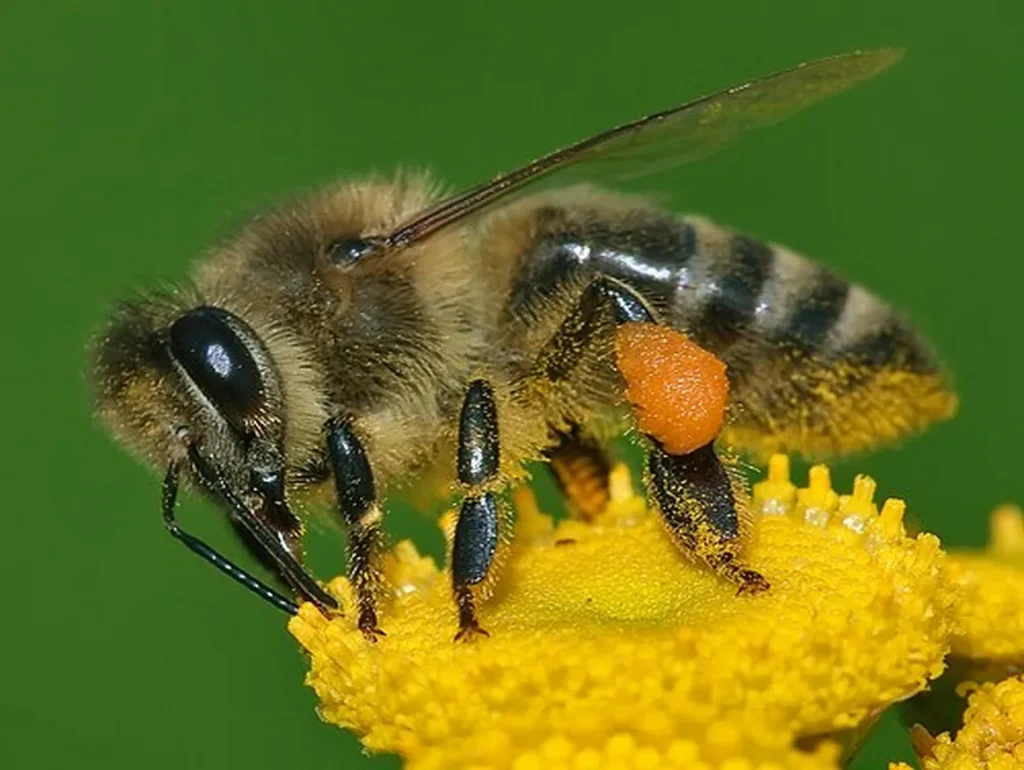
Series Conclusion: Honey as a Living Ecosystem Product**
Across this series, honey has been examined not as a commodity, nor merely as a nutritional substance, but as the outcome of a living ecosystem. When viewed through this lens, honey ceases to be just something we consume. It becomes something we participate in.
To arrive at this understanding, we moved step by step—away from simplified labels and toward biological reality.
From Sugar to System
The modern tendency to describe honey in terms of calories, glycemic index, or antioxidant content reflects a broader habit of reducing complex biological substances into measurable units. While these metrics have value, they are insufficient.
Honey is not defined by its sugar content alone. It is defined by how that sugar came to exist.
Behind every drop of honey lies an interconnected system:
- flowering plants producing nectar
- bees acting as biological processors
- microbial communities shaping transformation
- environmental conditions guiding variation
Honey is therefore not an ingredient—it is a system preserved in edible form.
Microbes as Invisible Architects
Throughout this series, microbes have emerged as the quiet architects of honey’s identity. They do not appear on labels, nor are they visible to the eye, yet their influence is decisive.
Microbes:
- assist bees in transforming nectar
- stabilize enzymatic activity
- regulate acidity and antimicrobial balance
- leave metabolic signatures embedded in honey
Without microbial mediation, nectar remains nectar. It does not become honey in any meaningful biological sense.
This reality places honey within a unique category of foods—those shaped by microbial intelligence before human consumption.
A Food Shaped by Relationships, Not Recipes
Industrial food systems often prioritize control, uniformity, and scalability. Honey resists this framework.
No two honeys are truly identical because no two ecosystems are identical. Soil composition, floral diversity, climate, hive health, and microbial balance all leave their mark.
Honey is not made by following a recipe. It is formed through relationships.
This is why honey has always varied by region and season—and why attempts to fully standardize it inevitably erase something essential.
Processing as a Fork in the Biological Path
Modern processing marks a turning point. At one end lies honey as a living ecosystem product—biologically expressive, complex, and contextual. At the other lies honey as a standardized sweetener—predictable, uniform, and biologically simplified.
Processing itself is not the enemy. The issue is how much biological information is allowed to survive.
When honey is stripped of its enzymes, particulates, and microbial traces, it may remain sweet, but it no longer tells the story of its origin.
Human Interaction: Consumption or Continuation
When humans consume honey, they are not simply ingesting energy. They are interacting with the residue of an ecosystem.
This interaction has implications:
- for digestion
- for microbial signaling
- for metabolic response
- for cultural and ecological awareness
Honey reminds us that food is not just fuel. It is communication between living systems.
Why This Perspective Matters Now
In an era of increasing food abstraction—where nutrients are isolated, synthesized, and reassembled—honey stands as a reminder of another way.
It demonstrates that:
- biological complexity has value
- microbial participation is not contamination
- stability can emerge naturally
- nourishment can be ecological
Understanding honey as a living ecosystem product is not about nostalgia. It is about literacy—biological literacy.
From Product to Principle
When honey is seen clearly, it becomes more than food. It becomes a principle.
It teaches that:
- life transforms life
- complexity cannot be reduced without consequence
- value emerges from relationships, not isolation
These lessons extend beyond honey. They apply to how humans approach food, health, and ecosystems as a whole.
A Closing Reflection
Honey does not ask to be romanticized. It asks to be understood.
It does not promise miracles. It offers context.
In every jar of honey lies the trace of flowers, the labor of bees, the intelligence of microbes, and the environment that held them all together. To consume honey with awareness is to acknowledge this interconnectedness.
This is the deeper reality of honey.
Not as a supplement.
Not as sugar.
But as a living ecosystem product.
References (Series-Level / Conceptual Support)
- Engel, P., & Moran, N. A. (2013).
The gut microbiota of insects – diversity in structure and function.
FEMS Microbiology Reviews, 37(5), 699–735.
https://academic.oup.com/femsre/article/37/5/699/524163 Supports the concept of insects as microbiome-mediated biological systems. - Moran, N. A., et al. (2019).
The role of microbial symbionts in host biology.
Nature Reviews Microbiology, 17, 329–341.
https://www.nature.com/articles/s41579-019-0208-9 Establishes microbes as architects of host-mediated biological outcomes. - Zheng, H., et al. (2018).
Metabolism of toxic sugars by strains of the bee gut symbiont Gilliamella apicola.
mBio, 9(4).
https://journals.asm.org/doi/10.1128/mBio.01326-18 Reinforces the idea of microbial mediation in bee–nectar–honey systems. - Bogdanov, S., et al. (2008).
Honey for nutrition and health: A review.
Journal of the American College of Nutrition, 27(6), 677–689.
https://www.tandfonline.com/doi/abs/10.1080/07315724.2008.10719745 Provides foundational support for honey as more than a sugar source. - Lynch, S. V., & Pedersen, O. (2016).
The human intestinal microbiome in health and disease.
New England Journal of Medicine, 375, 2369–2379.
https://www.nejm.org/doi/full/10.1056/NEJMra1600266 Supports the discussion on food–microbiome interaction in humans. - Selhub, E. M., et al. (2014).
Fermented foods, microbiota, and mental health.
Journal of Physiological Anthropology, 33(2).
https://jphysiolanthropol.biomedcentral.com/articles/10.1186/1880-6805-33-2 Supports the broader concept of microbial-conditioned foods affecting human biology. - Fardet, A., & Rock, E. (2014).
Toward a new philosophy of preventive nutrition: From a reductionist to a holistic paradigm.
Nutrition Reviews, 72(7), 430–445.
https://academic.oup.com/nutritionreviews/article/72/7/430/1933898 Strong conceptual support for treating foods as systems, not isolated nutrients.