

Honey as a Microbial-Mediated Food: Implications for Humans
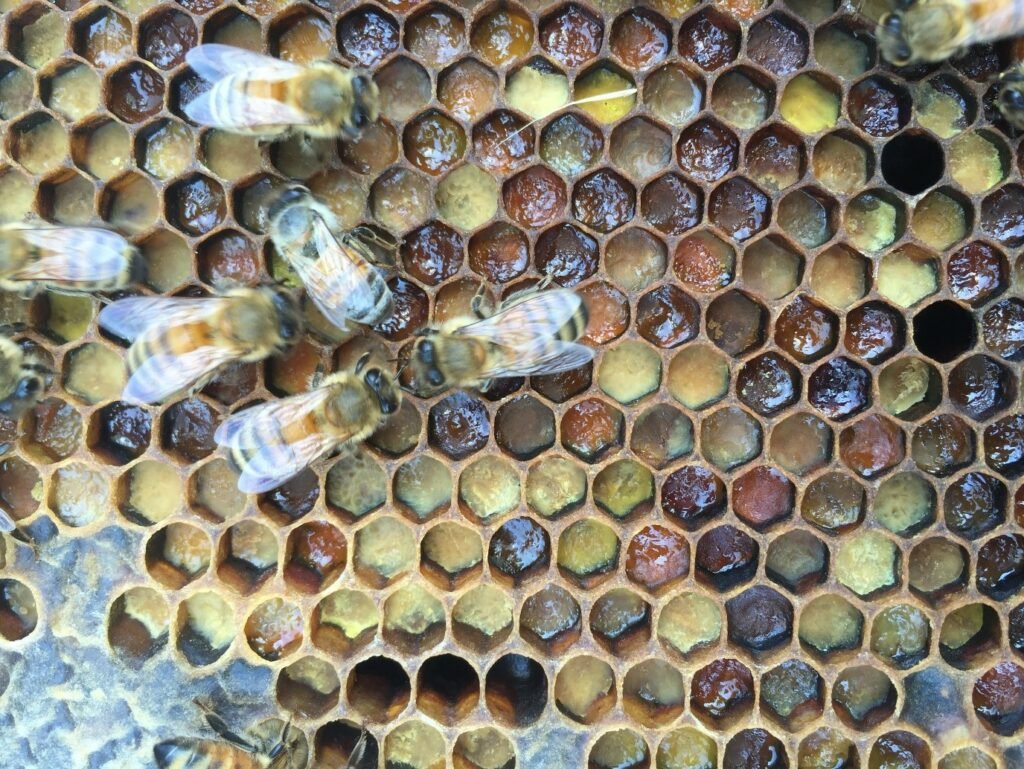
When honey is viewed merely as a natural sweetener, its role in human nutrition appears limited. But when honey is understood as a microbial-mediated food—a substance shaped by microbial activity before it ever reaches human consumption—its significance expands far beyond calories or taste.
Honey occupies a unique position in the food landscape. It is not fermented in the conventional sense, nor is it sterile. Instead, it is the outcome of controlled biological processing, where microbial influence is present, regulated, and preserved within a stable matrix.
This distinction matters deeply when considering honey’s interaction with the human body.
From Bee Microbiome to Human Consumption

The microbial story of honey does not end in the hive. The biochemical fingerprints left behind by bee-associated microbes—enzymes, organic acids, antimicrobial compounds, and metabolic by-products—remain embedded in honey when it is consumed by humans.
While most microorganisms involved in honey production do not colonize the human gut directly, their metabolic outputs can still influence human physiology. In this way, honey functions less like a simple sugar and more like a biologically conditioned food.
In contrast to refined sugars, honey enters the human digestive system already shaped by:
- enzymatic pre-processing
- acidic regulation
- microbial selection pressures
This pre-conditioning alters how honey behaves metabolically and biologically.
Honey and the Human Gut Environment
The human gut is itself a microbial ecosystem. Foods that interact with this ecosystem do so not only through nutrients, but through signals and substrates that influence microbial behavior.
Honey contributes to this interaction in several indirect ways:
-
- Enzymatic residues in honey can affect digestion kinetics.
-
- Organic acids help modulate gut pH at a micro level.
-
- Polyphenols and bioactive compounds act as selective substrates for certain gut microbes.
Rather than feeding all microbes equally, honey tends to select—supporting some microbial activities while inhibiting others.
This selective behavior helps explain why honey does not behave metabolically like refined sugar, despite having a similar sugar composition on paper.
Antimicrobial Does Not Mean Anti-Microbial Life
One common misconception is that honey’s antimicrobial properties make it hostile to microbial life altogether. In reality, honey is selectively antimicrobial.
Honey inhibits pathogenic or opportunistic organisms while coexisting with beneficial microbial interactions. This mirrors what occurs in the bee gut itself: balance, not sterility.
This distinction is critical. Foods that are overly sterile or aggressively antimicrobial can disrupt microbial ecosystems. Honey, by contrast, reflects a biologically moderated antimicrobial strategy, one refined by evolution rather than industrial design.
Metabolic Implications Beyond Sugar Content
Standard nutritional models often treat honey as interchangeable with other sugars. Yet studies and observations repeatedly show differences in:
-
- glycemic response
-
- satiety
-
- post-prandial metabolic signaling
These differences are not solely explained by fructose-to-glucose ratios. They are better understood as the result of microbial-mediated complexity.
Honey carries with it:
-
- enzyme activity that affects sugar absorption
-
- acids that influence digestive signaling
-
- bioactive compounds that interact with gut and liver metabolism
Thus, honey’s metabolic footprint is contextual, not purely quantitative.
Processing, Pasteurization, and the Loss of Biological Context
Modern processing methods often aim to standardize honey—heating, filtering, and refining it for visual clarity and shelf uniformity. While these processes may preserve sweetness, they frequently reduce or eliminate the very biological features that make honey unique.
Excessive processing can:
-
- denature enzymes
-
- alter organic acid balance
-
- remove bioactive compounds
-
- erase microbial signatures
What remains is honey as a sugar product, stripped of its microbial heritage.
This raises an important implication: not all honey behaves the same in the human body, even if nutritional labels appear identical.
Honey as an Ecological Food
Viewed through a microbial lens, honey becomes an ecological food—one that reflects interactions across species and systems. It carries information from:
-
- plant ecology
-
- insect biology
-
- microbial metabolism
When humans consume honey, they are not just ingesting nutrients; they are ingesting the residue of an ecosystem.
This perspective reframes honey consumption from indulgence to participation in a biological continuum.
Rethinking Honey in Human Diets
Understanding honey as a microbial-mediated food encourages a shift in how it is discussed and used:
-
- from “natural sugar” to biologically active substance
-
- from calorie counting to functional context
-
- from isolated nutrition to ecosystem-derived nourishment
This does not position honey as a miracle food. Rather, it places honey in its correct biological category—neither sugar nor supplement, but something in between.
A Bridge Between Microbial Worlds
Honey represents a rare bridge between microbial worlds: shaped by microbes in one organism, interacting with microbes in another. Few foods carry this dual microbial legacy so clearly.
By recognizing this, humans gain not just a better understanding of honey, but a deeper appreciation of how food, microbes, and health are interconnected.
Honey’s true value lies not only in what it contains, but in how it came to be—and how that history continues to shape its interaction with the human body.
This is the deeper implication of honey as a microbial-mediated food.