Bee Host
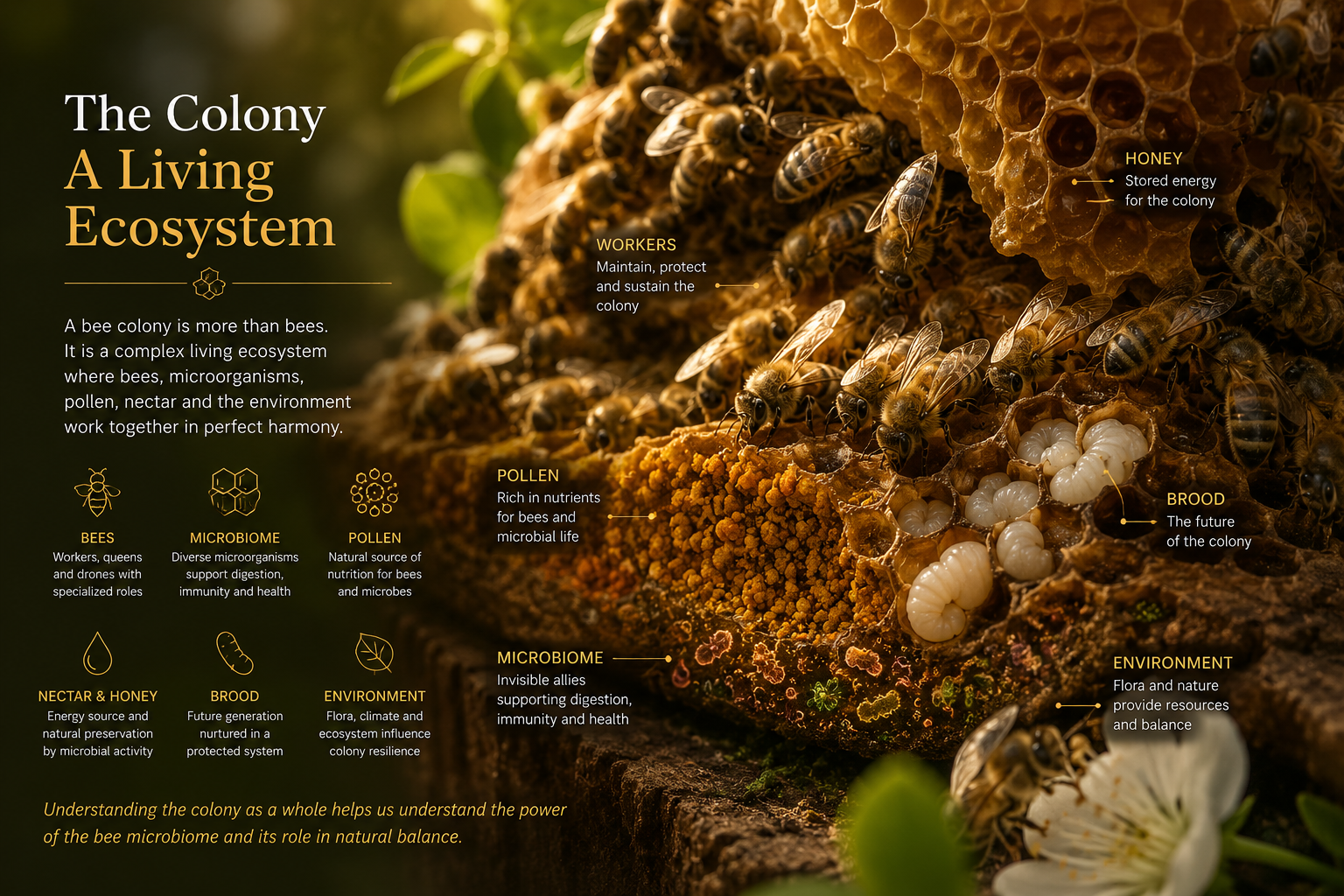
Workers, queens, drones and larvae each participate in the biology of the hive.

MICROBA RESEARCH
Exploring the hidden microbial ecosystem inside honey bees and its potential role in resilience, nutrition and natural biological balance.
01 — WHY STUDY BEES?
Honey bees have survived for millions of years through cooperation, adaptation and close interaction with microorganisms.
Rather than studying honey alone, MICROBA explores the living microbial systems associated with bees, their digestive tract, the hive and the surrounding environment.
These relationships may help us better understand biological resilience, ecological balance and naturally occurring transformation processes.
02 — INSIDE THE BEE
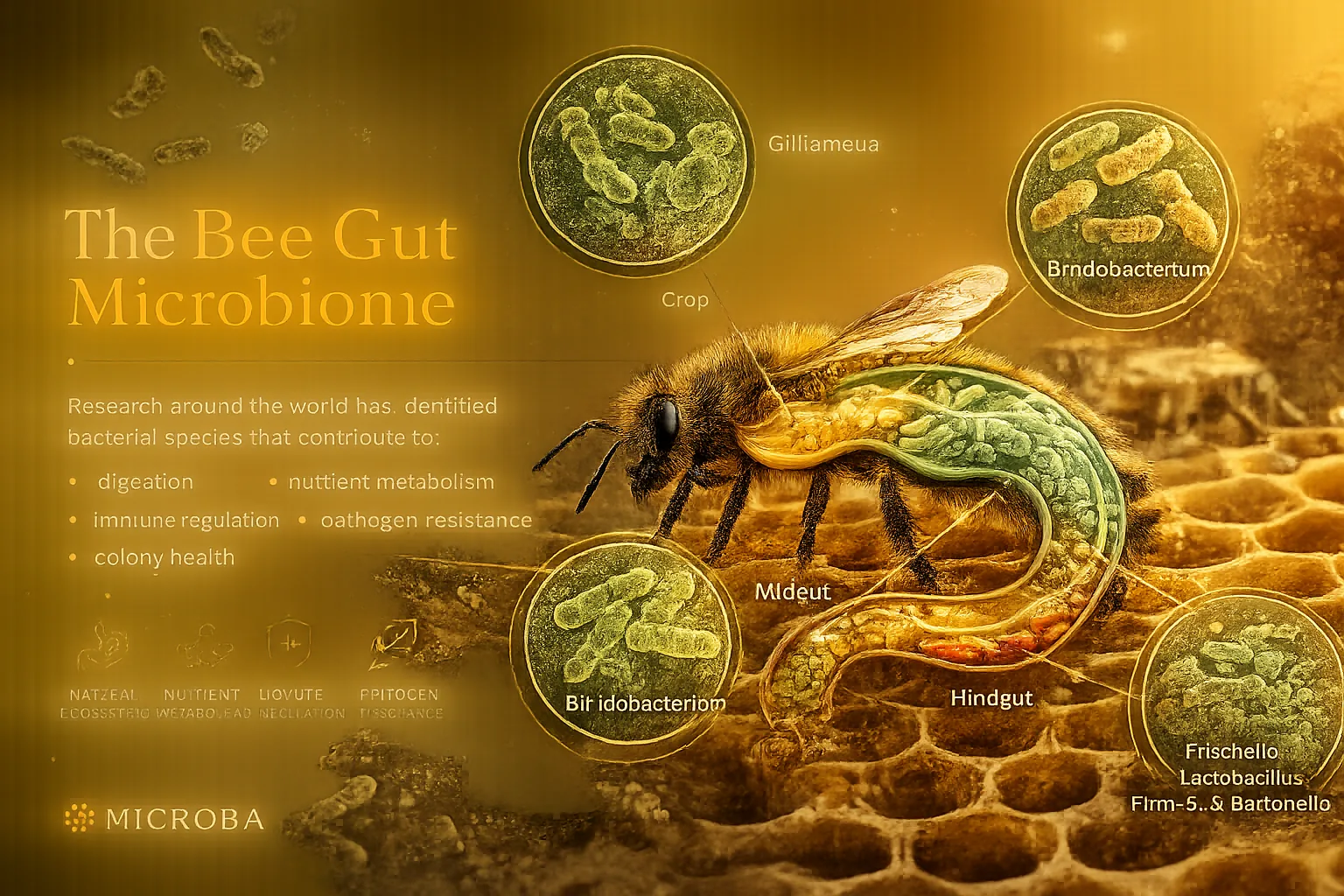
The honey bee digestive tract contains a relatively stable community of microorganisms adapted to life within the bee host.
Scientific research has linked core bee-associated bacteria with digestion, nutrient metabolism, gut barrier function and protection against some pathogens.
03 — THE COLONY
A healthy colony is more than a collection of individual bees. It is a living network in which bees, brood, pollen, nectar, comb, microbes and environmental conditions continually interact.
Workers, queens, drones and larvae each participate in the biology of the hive.
Microorganisms occupy the bee gut, hive materials and food-associated environments.
Pollen, nectar and stored hive foods undergo continuous biological handling.
Floral diversity, geography and habitat conditions influence the wider ecosystem.
04 — NATURAL TRANSFORMATION
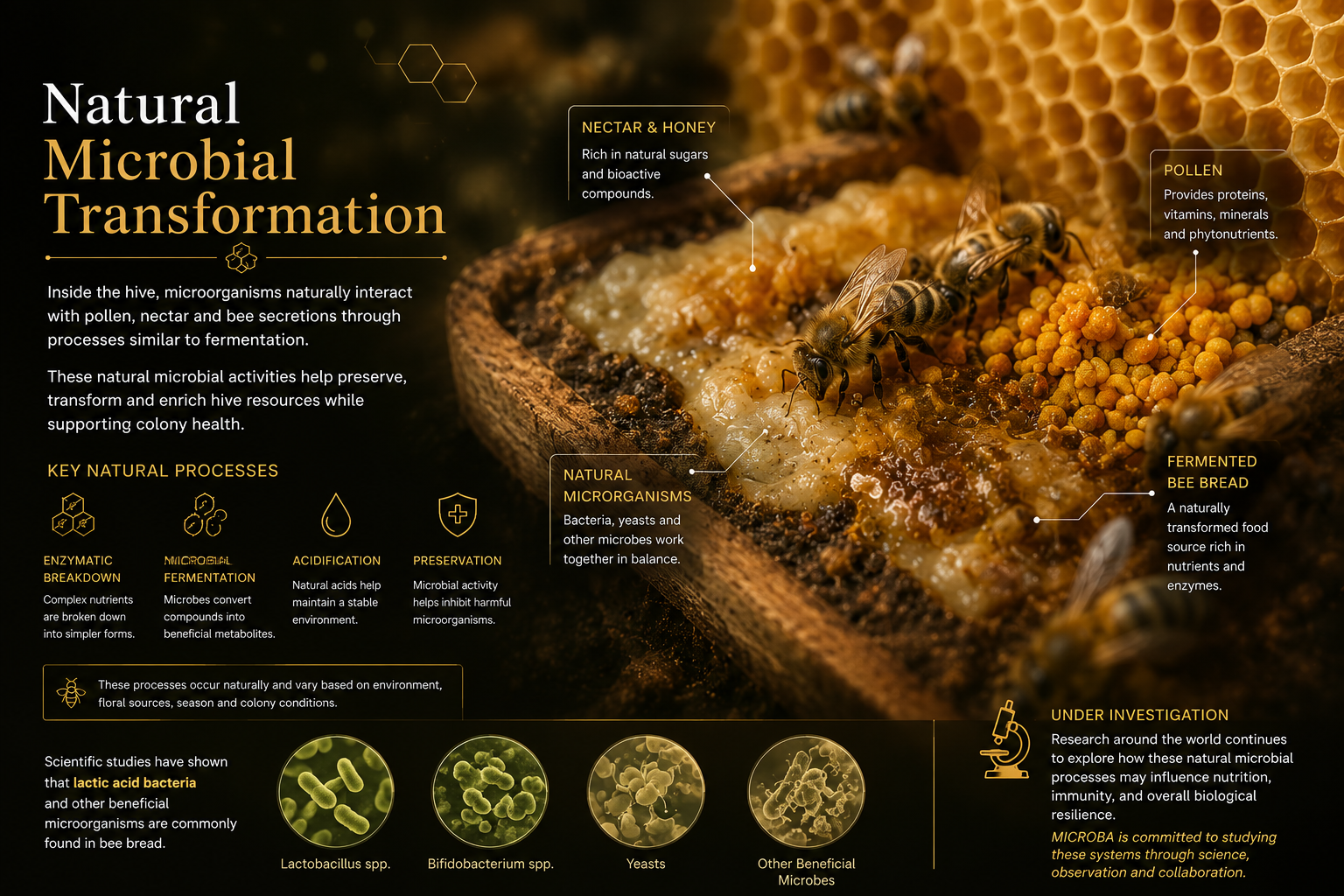
Within the hive, microorganisms take part in naturally occurring biological processes involving pollen, nectar and stored food resources.
These processes may influence acidity, preservation, nutrient availability and the chemical environment of hive materials.
MICROBA studies these interactions carefully as subjects for observation, documentation and future laboratory investigation.
05 — SCIENTIFIC UNDERSTANDING
International research continues to investigate how the bee microbiome contributes to the biology and resilience of honey bees.
Many mechanisms remain under investigation. MICROBA presents these questions as research directions, not medical claims.
06 — OUR RESEARCH DIRECTION
Which microorganisms naturally coexist with honey bees?
How do microbial communities change across habitats and food sources?
What biological interactions occur between microbes and the bee host?
Can these natural systems inspire future responsible innovation?
07 — RESEARCH ROADMAP
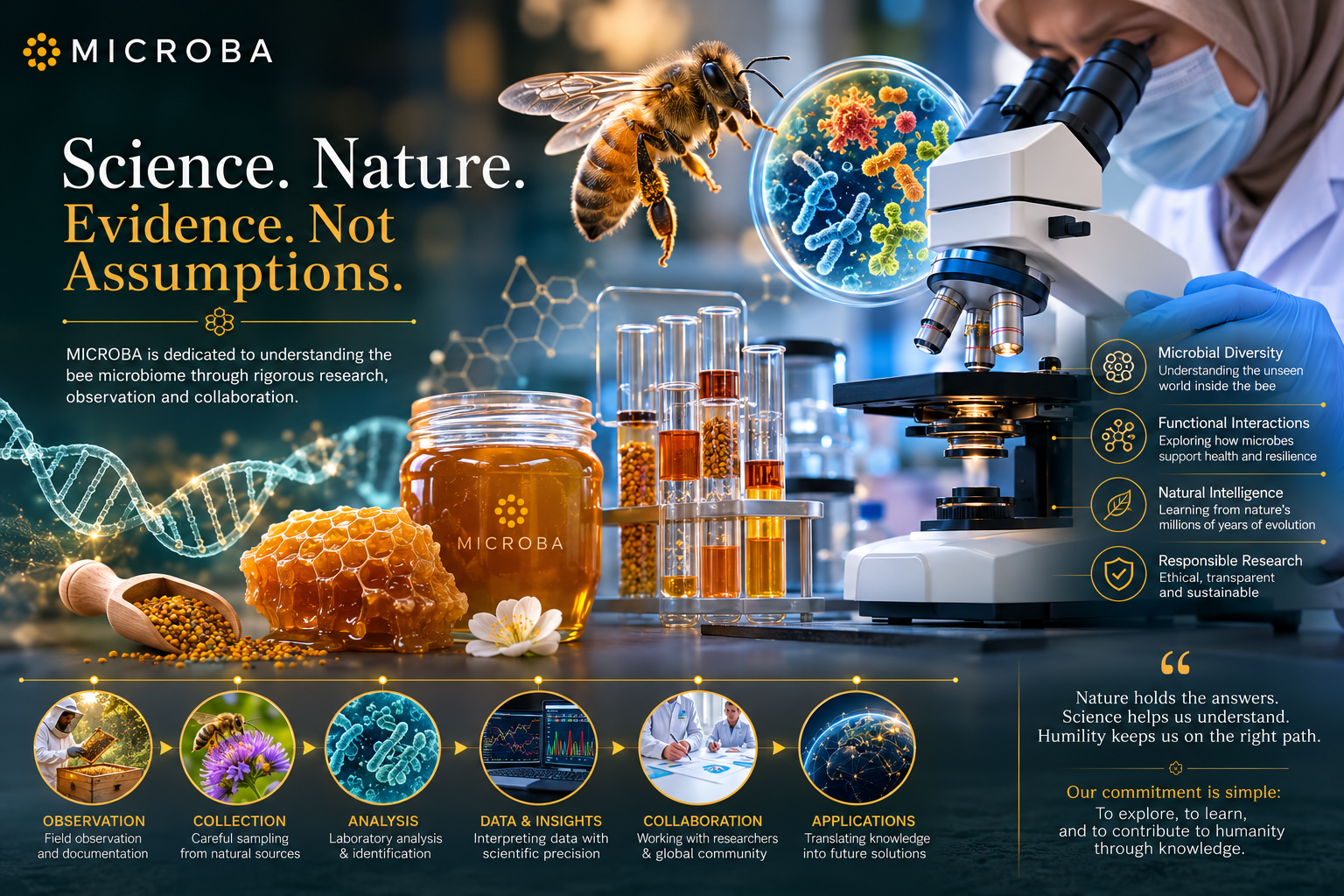
MICROBA follows a progressive framework in which evidence takes precedence over assumptions.
Nature teaches before science explains.
Understanding the bee microbiome requires curiosity, humility and rigorous scientific investigation.
CONTINUE THE JOURNEY
Discover how observation, microbiome science and controlled investigation shape our wider research direction.