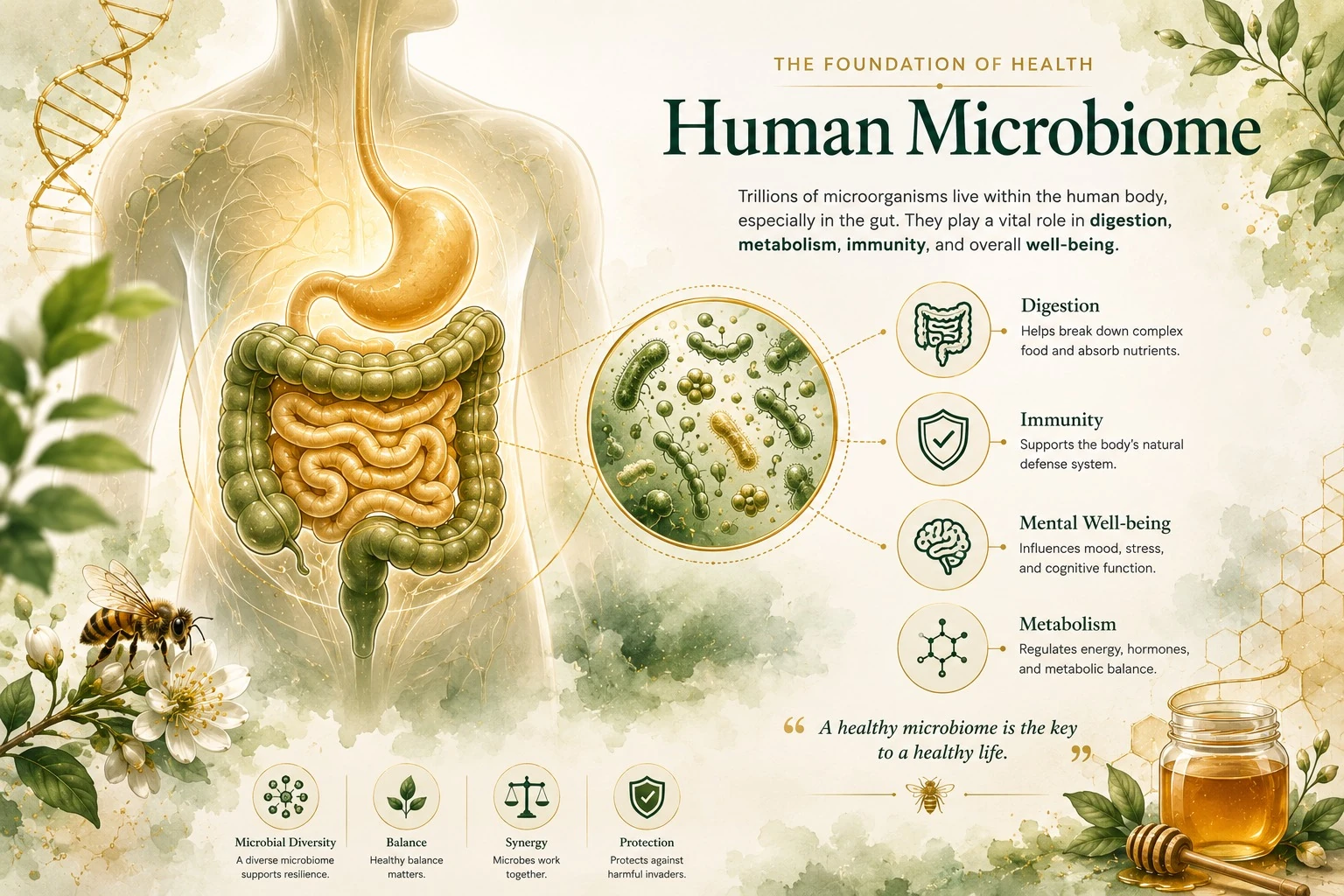
Human Microbiome
Exploring how microbial communities interact with digestion, metabolism, immunity, lifestyle and overall biological balance.
- Gut microbial ecology
- Immune and metabolic interaction
- Lifestyle and environmental influence
MICROBA RESEARCH
Science inspired by nature. Evidence guided by observation. Innovation shaped by the relationships between humans, microbes, food and the living world.
01 — OUR RESEARCH PHILOSOPHY
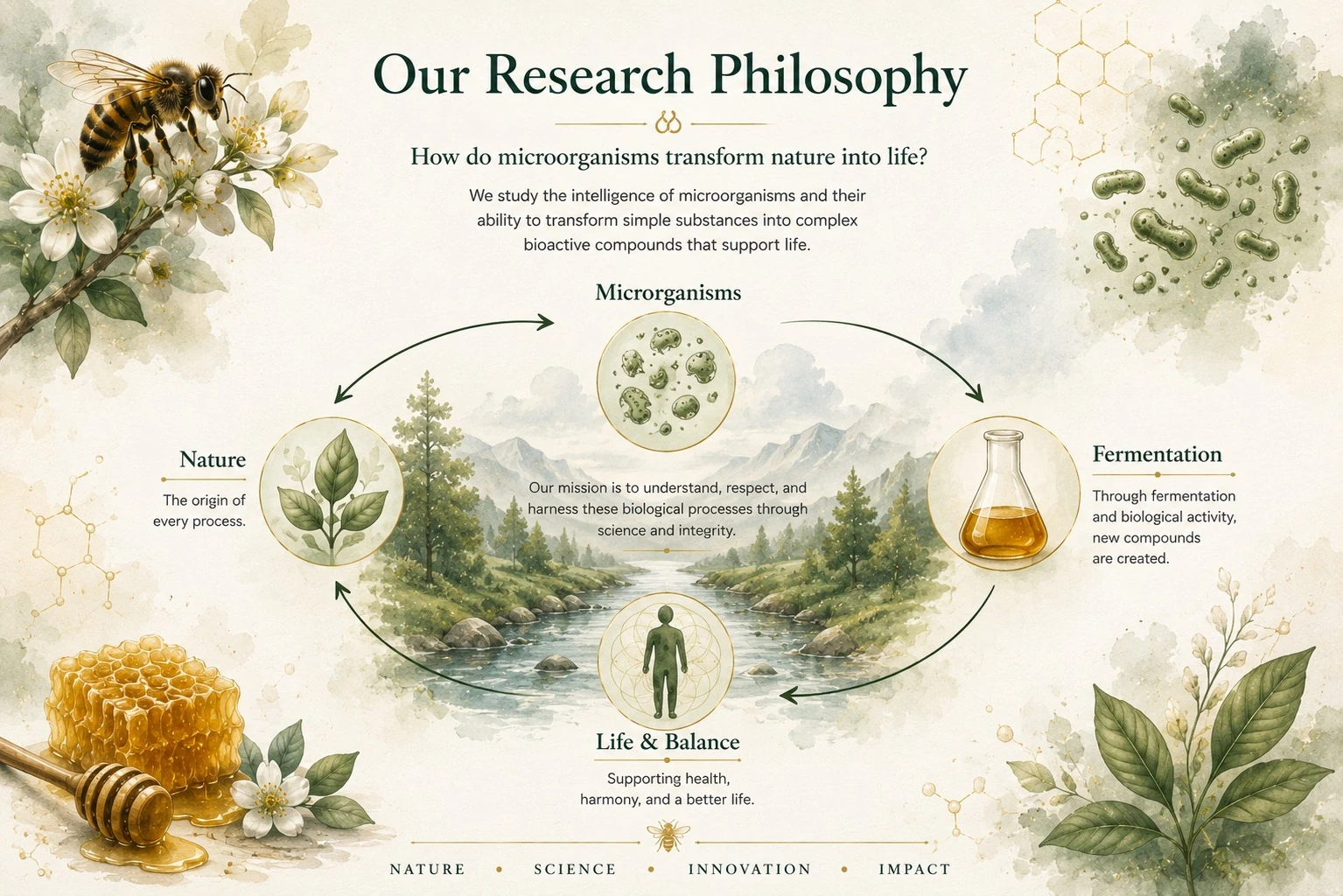
MICROBA research begins with observation. We study how living systems maintain balance, resilience and cooperation before asking how those principles may inform human health and nutrition.
Rather than treating microorganisms as isolated entities, we explore them as members of wider ecosystems involving hosts, food, environment and biological processes.
Every hypothesis is approached with curiosity, tested through evidence and refined through responsible scientific inquiry.
02 — RESEARCH FOUNDATION
Our research areas are different expressions of one central question: how do living systems transform simple materials into balance, resilience and life?

Exploring how microbial communities interact with digestion, metabolism, immunity, lifestyle and overall biological balance.

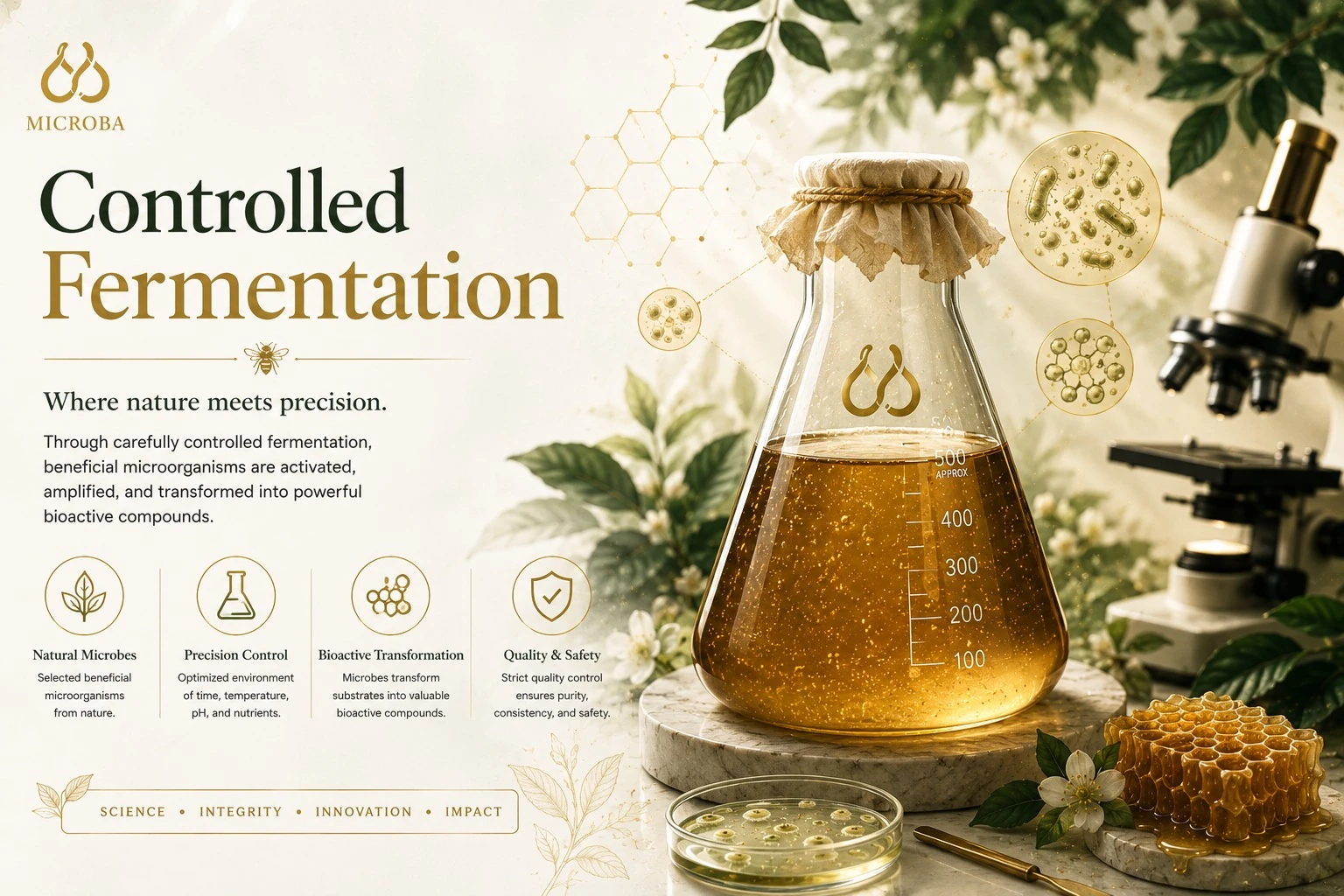
Studying how selected microorganisms transform natural materials through reproducible and carefully managed biological processes.

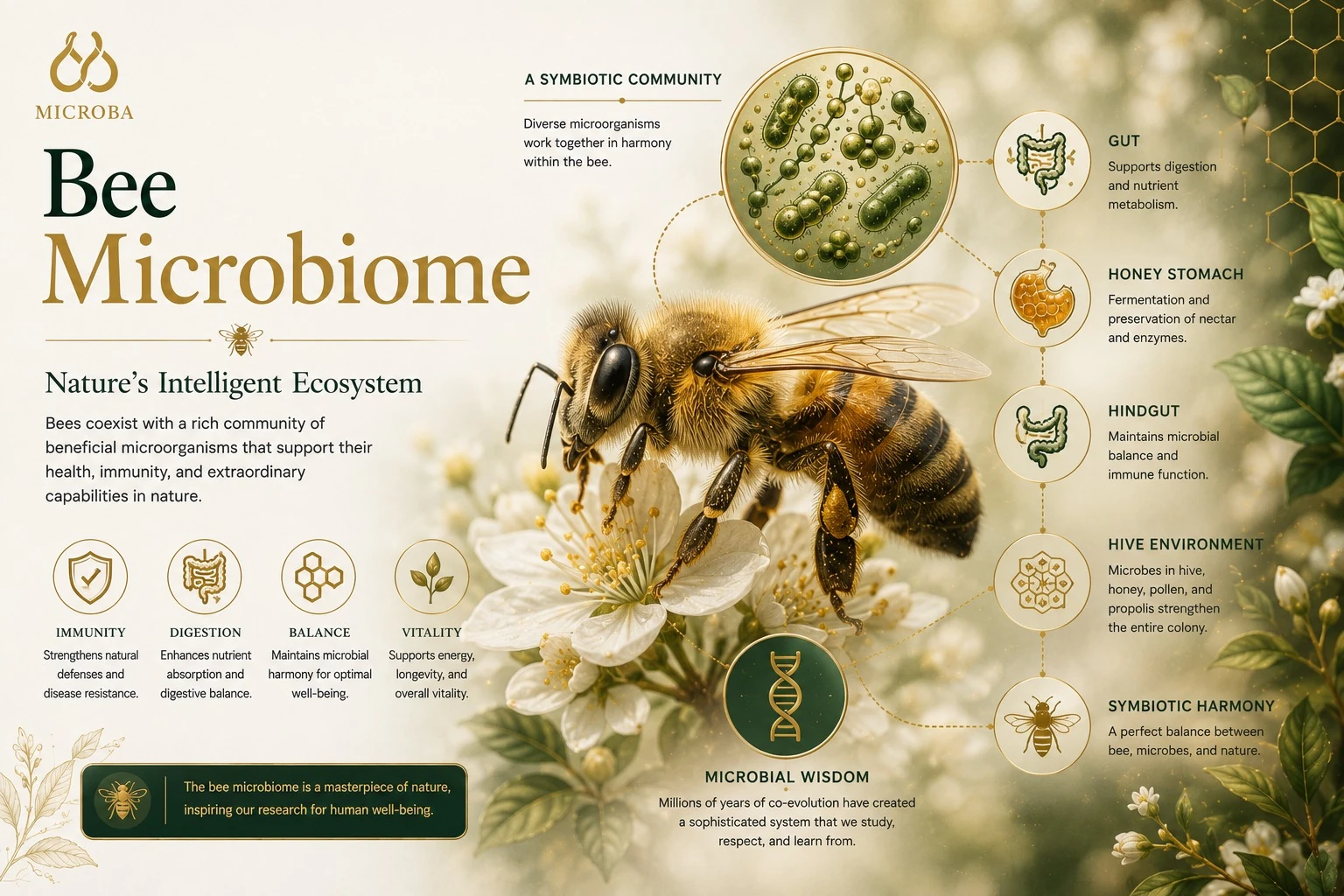
Investigating the microorganisms associated with bees, colonies, food sources and hive environments as one connected biological community.

Exploring whole foods, naturally produced compounds and microbiome-supportive nutrition within a broader systems-based view of wellbeing.
03 — RESEARCH PROCESS
Our process is designed to keep curiosity disciplined, claims responsible and findings open to continuous refinement.
Study natural patterns, relationships and biological behaviour.
Identify meaningful questions grounded in real observations.
Form a clear and testable scientific explanation.
Apply controlled methods, documentation and measurement.
Compare outcomes against evidence and limitations.
Refine the question, method and interpretation continuously.
04 — GUIDING PRINCIPLES
Scientific claims should be supported by measurable outcomes, clear methods and honest interpretation.
Natural ecosystems provide questions and models, while evidence determines what conclusions can responsibly be made.
Uncertainty, limitations and evolving knowledge are acknowledged as part of responsible research.
Meaningful progress grows through responsible discussion among researchers, practitioners and communities.
05 — THE FUTURE
MICROBA aims to connect microbiology, fermentation, nutrition, bee science, environmental understanding and systems thinking within one long-term research ecosystem.
Our ambition is not merely to produce answers, but to build better questions, stronger methods and practical knowledge that can contribute to healthier relationships between people and the living world.
RESEARCH & COLLABORATION
Researchers, healthcare professionals, food scientists, beekeepers and curious minds are invited to explore responsible collaboration with MICROBA.