

01
Microbial Ecology
Microorganisms are studied in relation to one another and to the environments they inhabit.

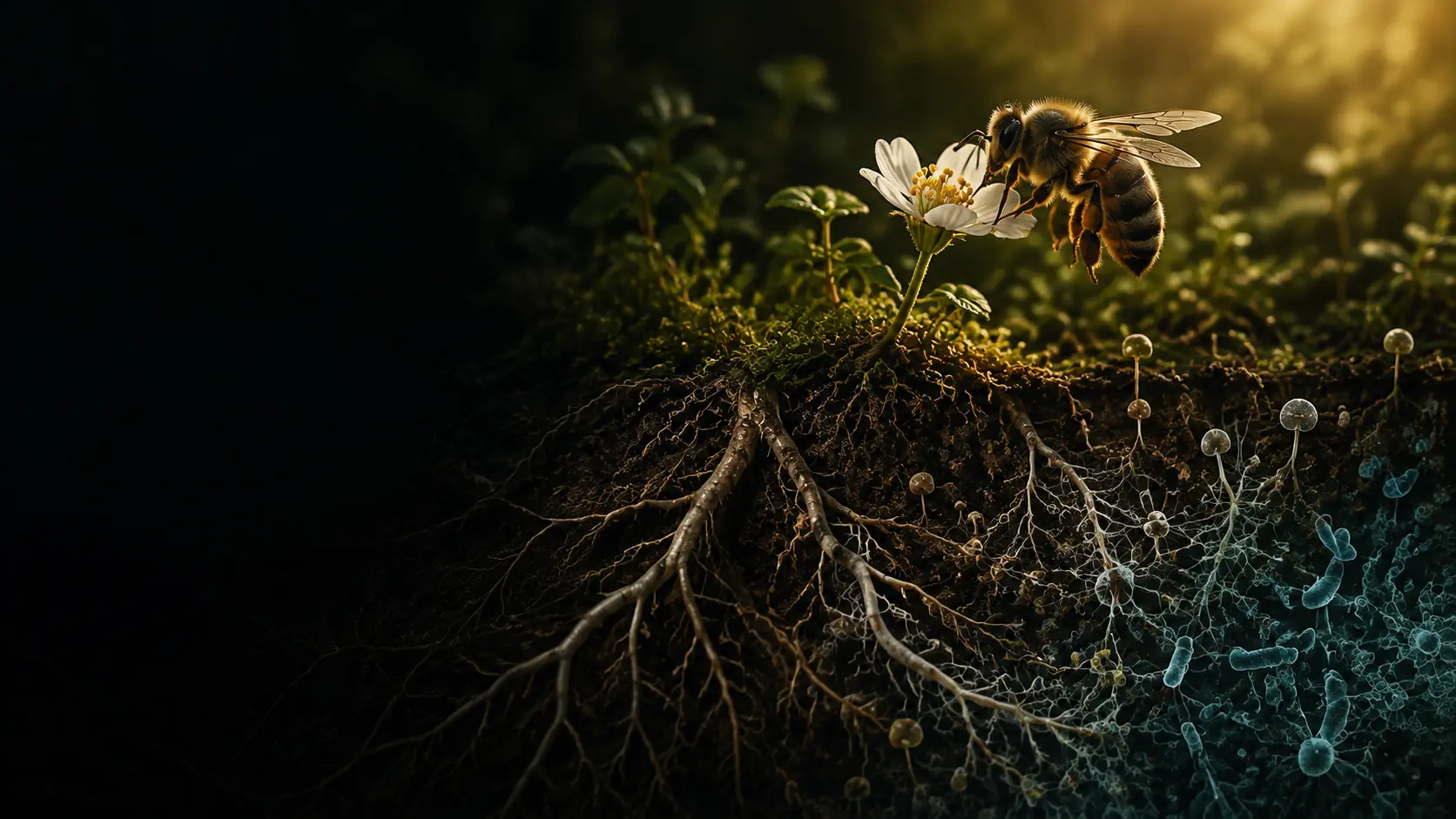
MICROBA SCIENCE
We study living systems by following the connections between microorganisms, hosts, environment, material and time.
NATURE & EVIDENCE
Every organism exists inside relationships. Microorganisms interact with hosts, food, water, place and one another. MICROBA Science begins by protecting that context.
Observation opens the question. Method disciplines it. Evidence determines what can responsibly be said.
Context before conclusion.
We follow the relationship—not only the object being studied.
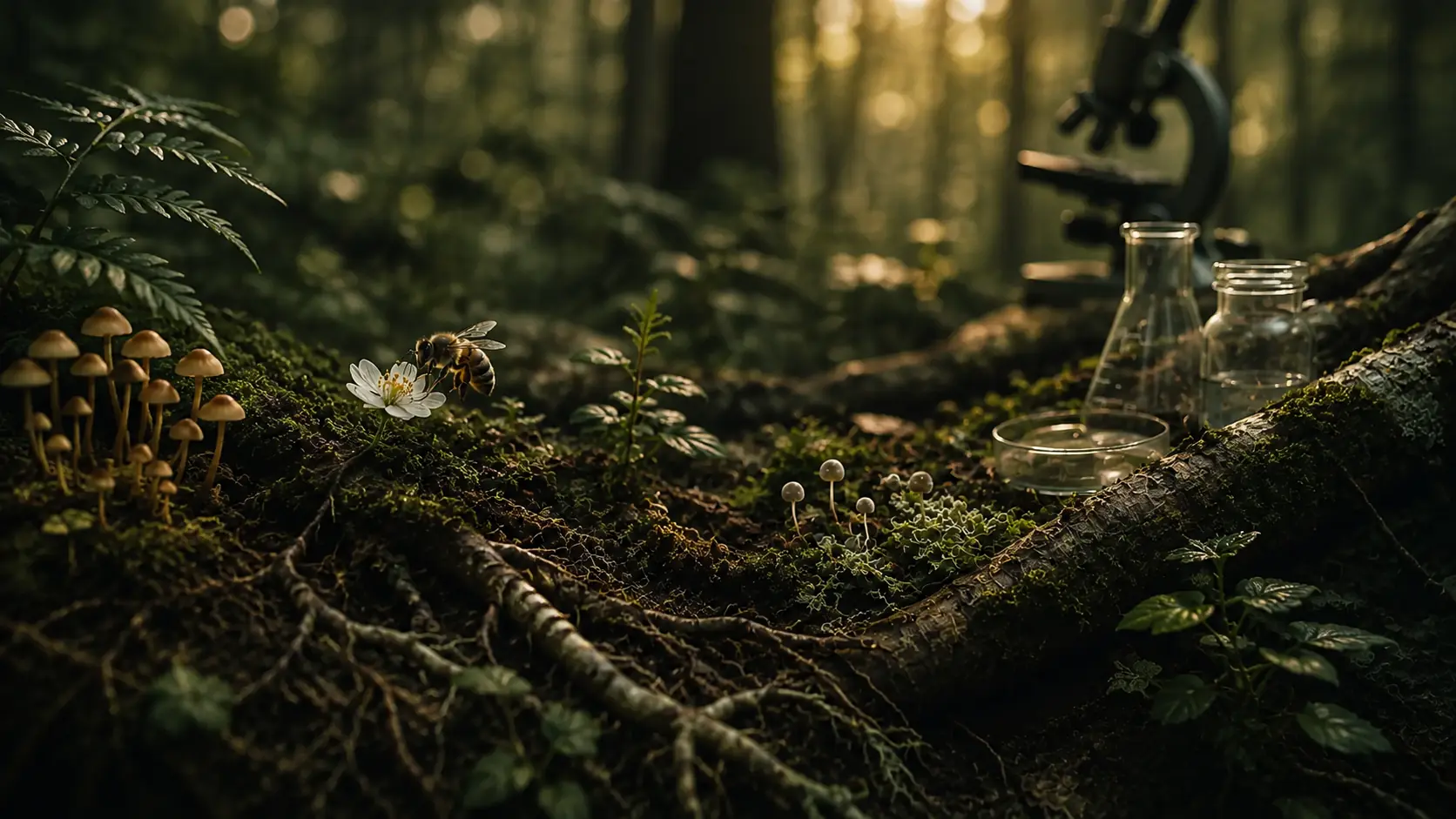
EXPLORE THE SCIENCE
Enter through a method, a living community, a process of transformation or the human ecosystem.
 METHOD & EVIDENCE
Research
See how observation becomes a question, how a question is tested, and how evidence changes what we understand.
Explore →
METHOD & EVIDENCE
Research
See how observation becomes a question, how a question is tested, and how evidence changes what we understand.
Explore →
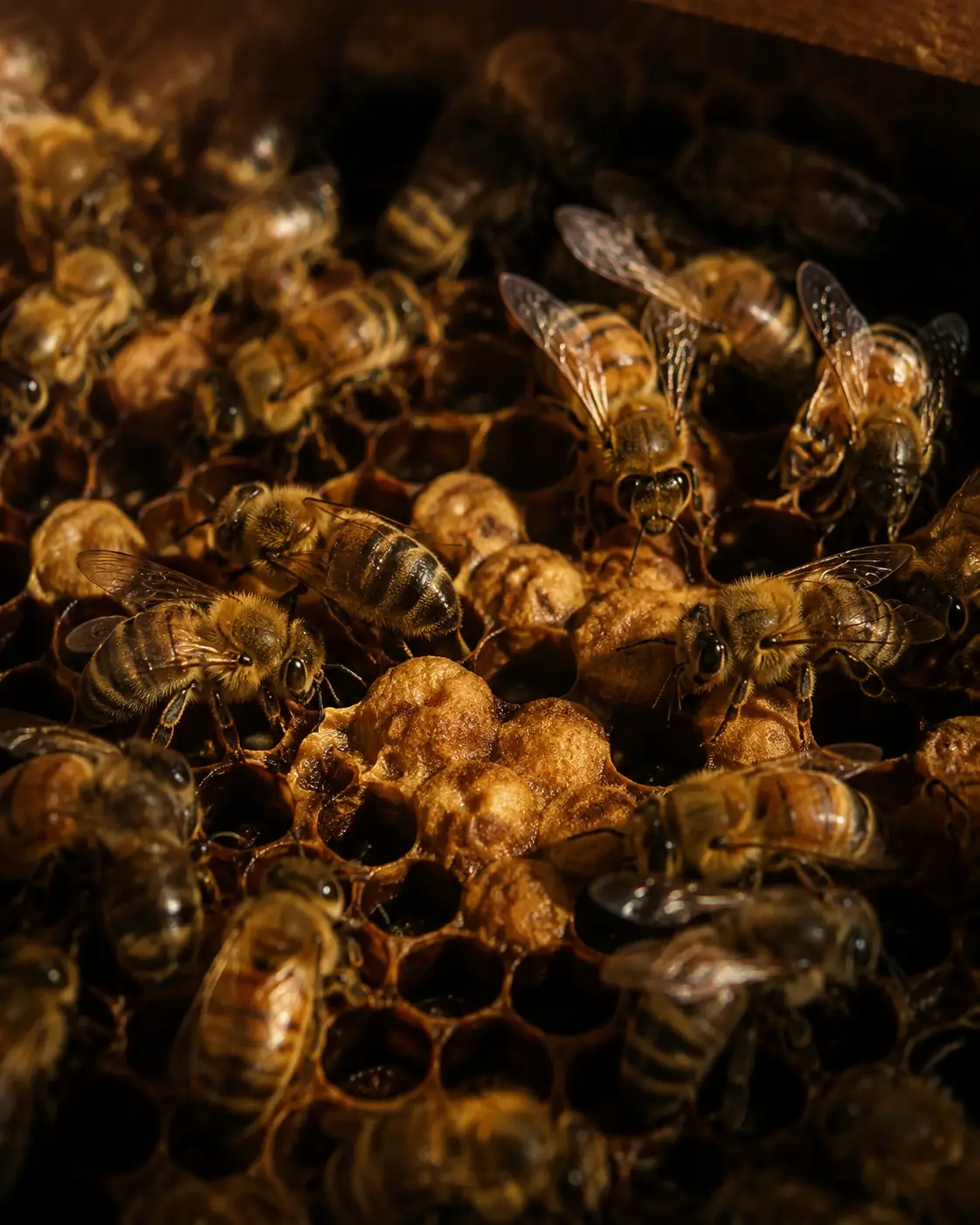 A LIVING COMMUNITY
Bee Microbiome
Explore the microorganisms associated with the honey bee and the wider relationships surrounding the colony.
Explore →
A LIVING COMMUNITY
Bee Microbiome
Explore the microorganisms associated with the honey bee and the wider relationships surrounding the colony.
Explore →
 BIOLOGICAL CHANGE
Fermentation
Follow transformation through microorganisms, environment, material and time without turning possibility into proof.
Explore →
BIOLOGICAL CHANGE
Fermentation
Follow transformation through microorganisms, environment, material and time without turning possibility into proof.
Explore →
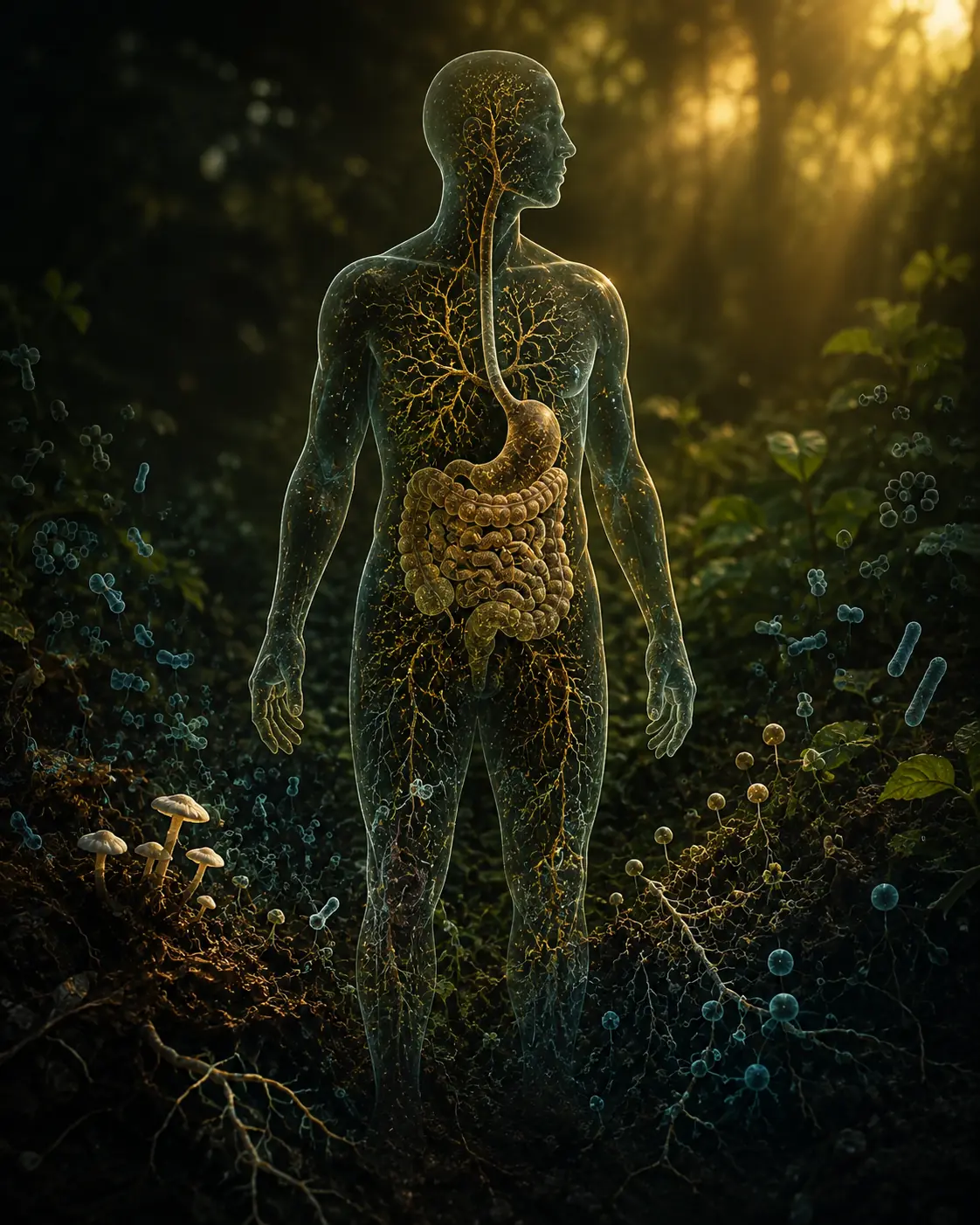 HUMAN ECOSYSTEM
Human Microbiome
Discover the body as habitat: dynamic microbial communities shaped by place, behaviour and changing conditions.
Explore →
HUMAN ECOSYSTEM
Human Microbiome
Discover the body as habitat: dynamic microbial communities shaped by place, behaviour and changing conditions.
Explore →
RESEARCH FOCUS
Our public Science direction brings five connected areas into one responsible frame.
Microorganisms are studied in relation to one another and to the environments they inhabit.
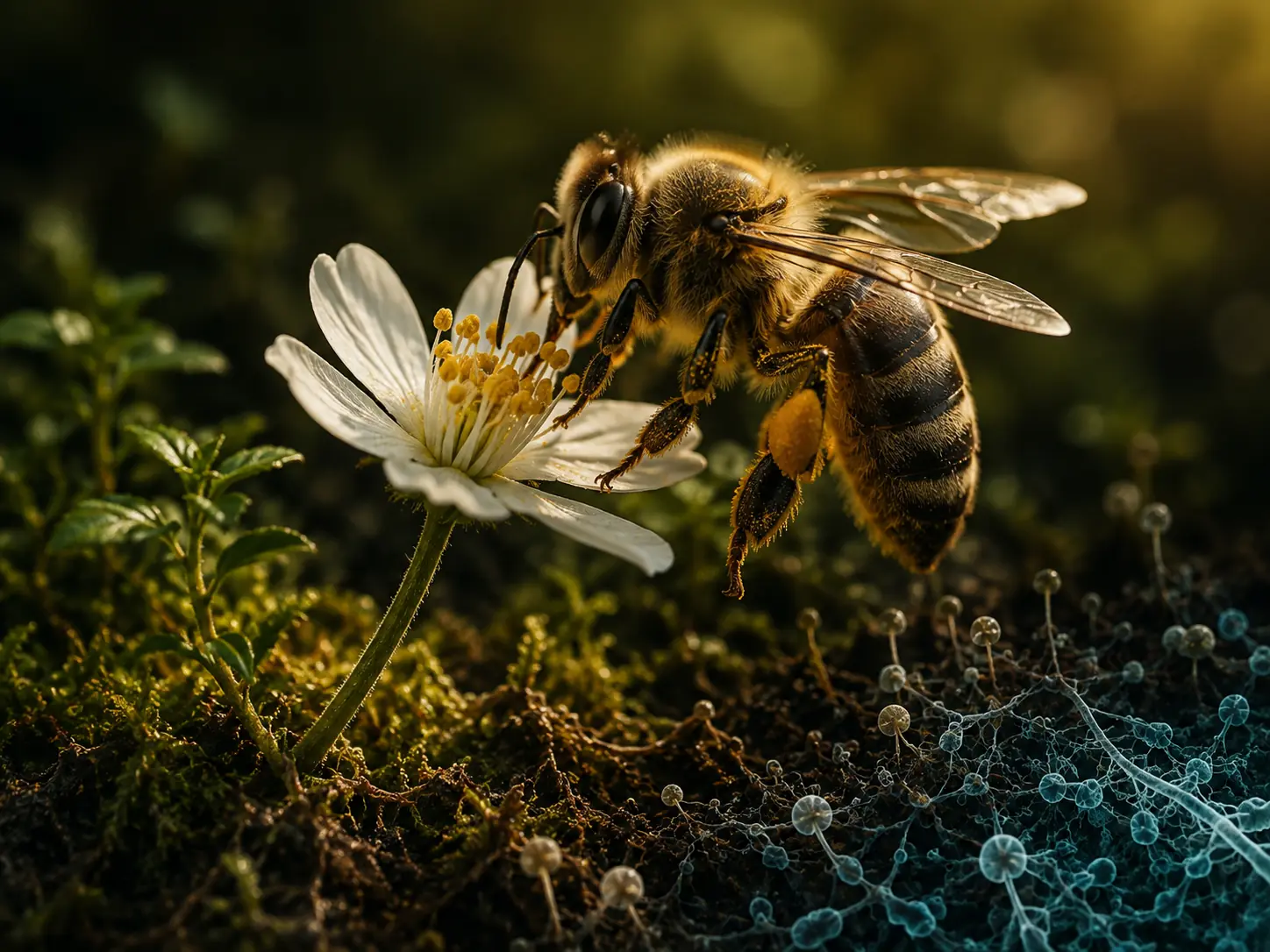
Living hosts and microbial communities are approached as connected systems, not isolated parts.
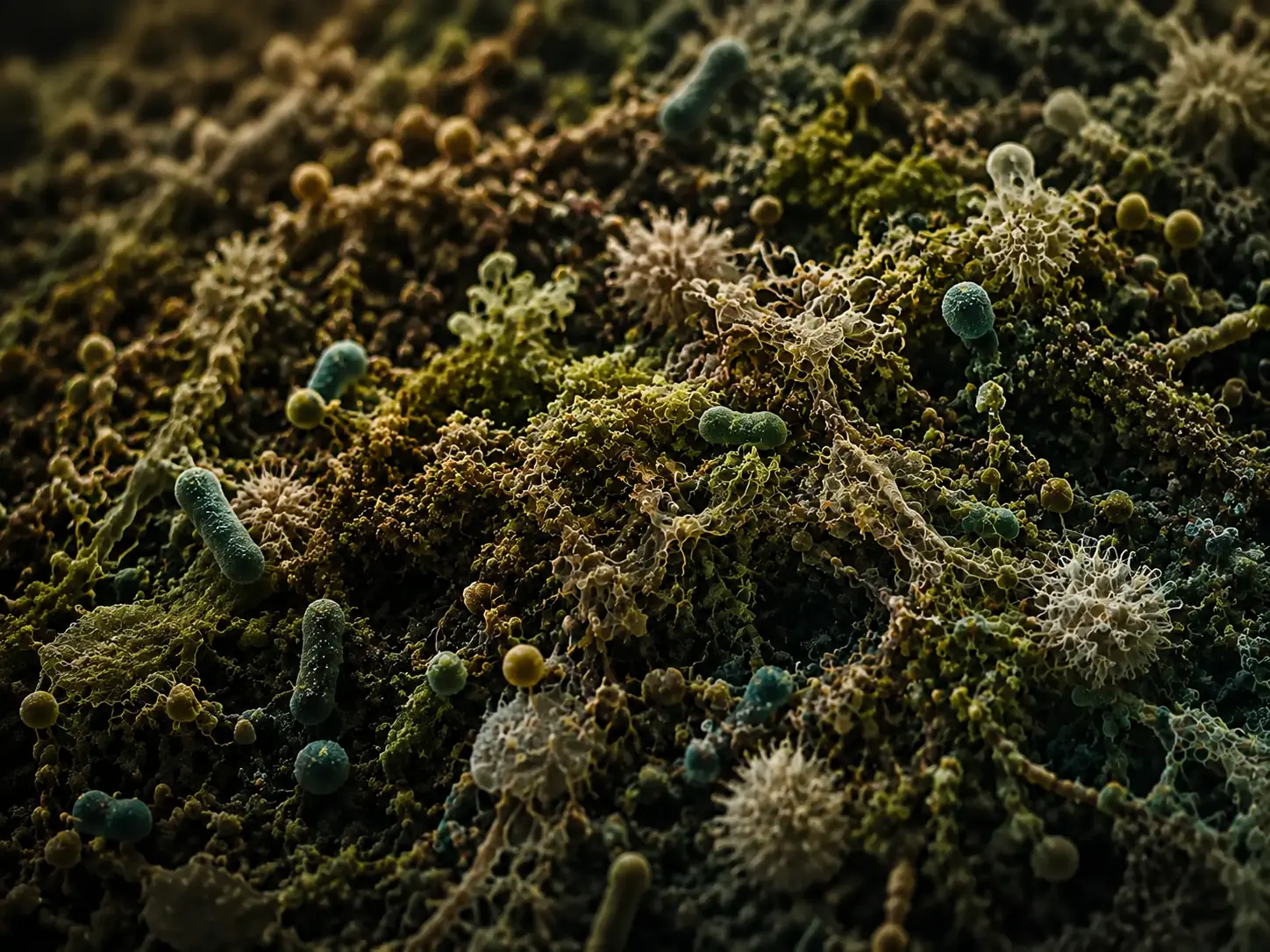
We ask what microorganisms may be doing, how that function is observed and what remains uncertain.
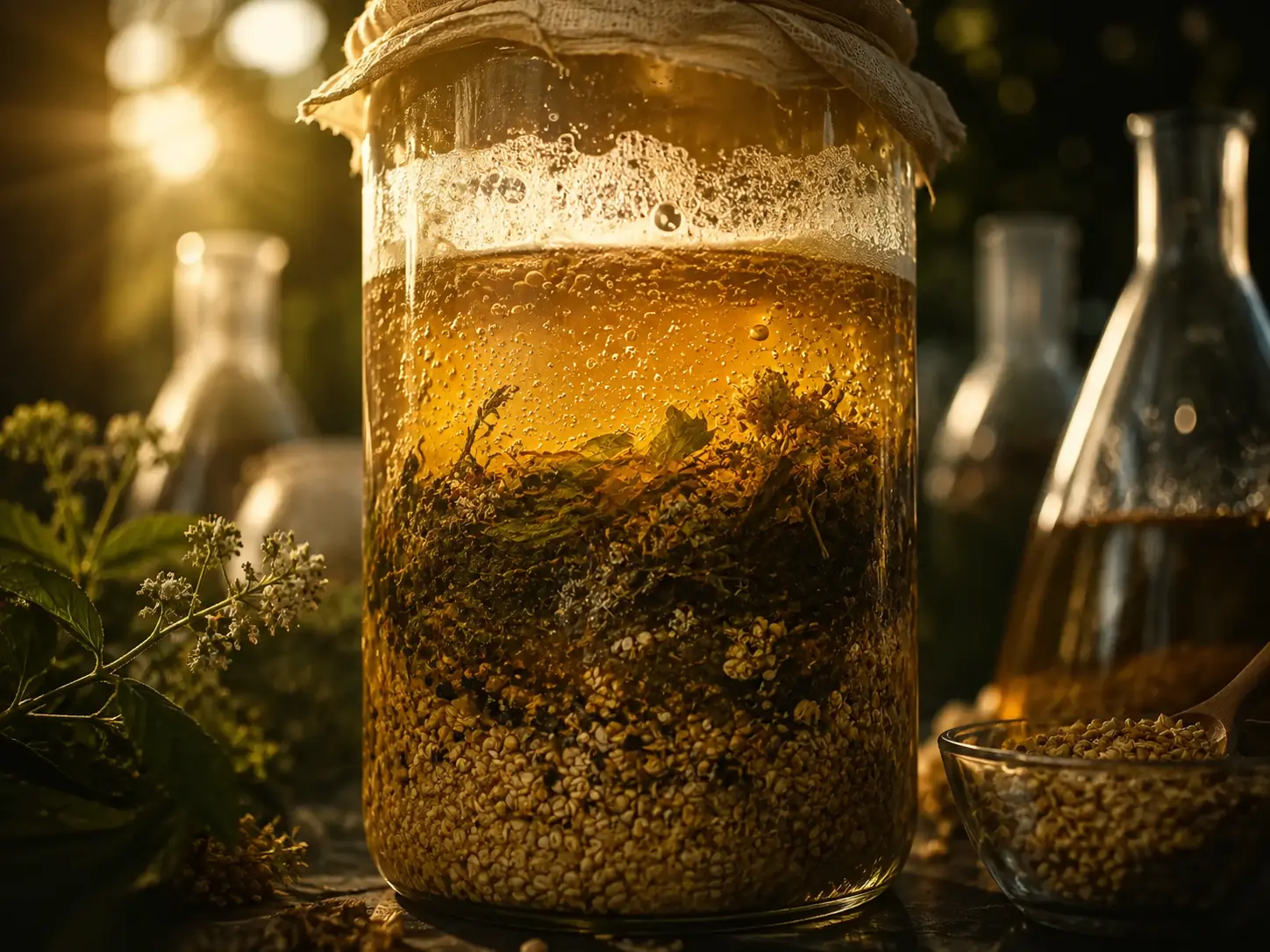
Change is followed through material, microorganisms, conditions and time.
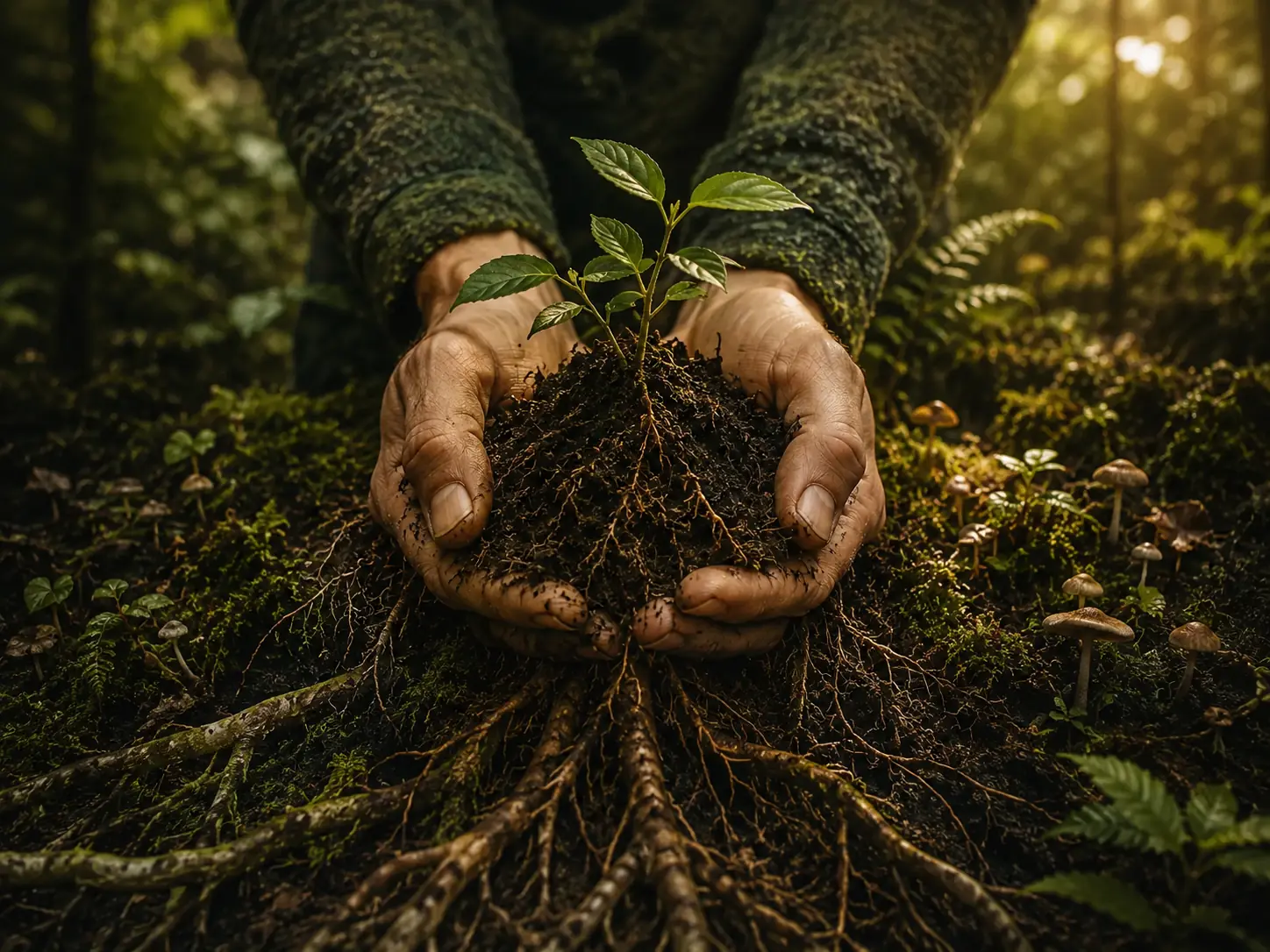
Findings remain connected to the wider ecological and human context in which they arise.
HOW WE LEARN
No single image or result carries the whole story. Understanding grows through a transparent sequence of careful work.
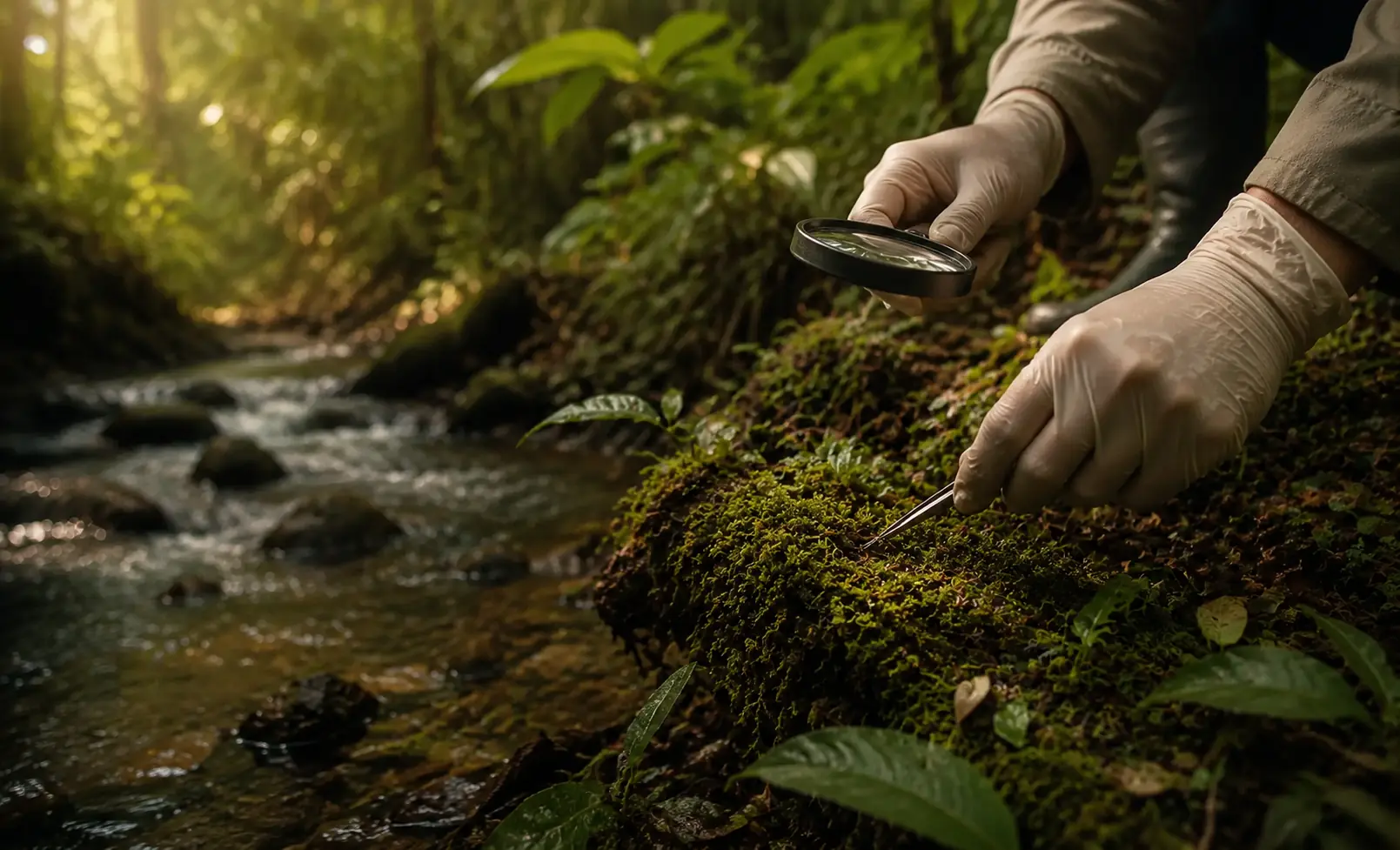
Begin with the living context and notice relationships before reducing them to variables.
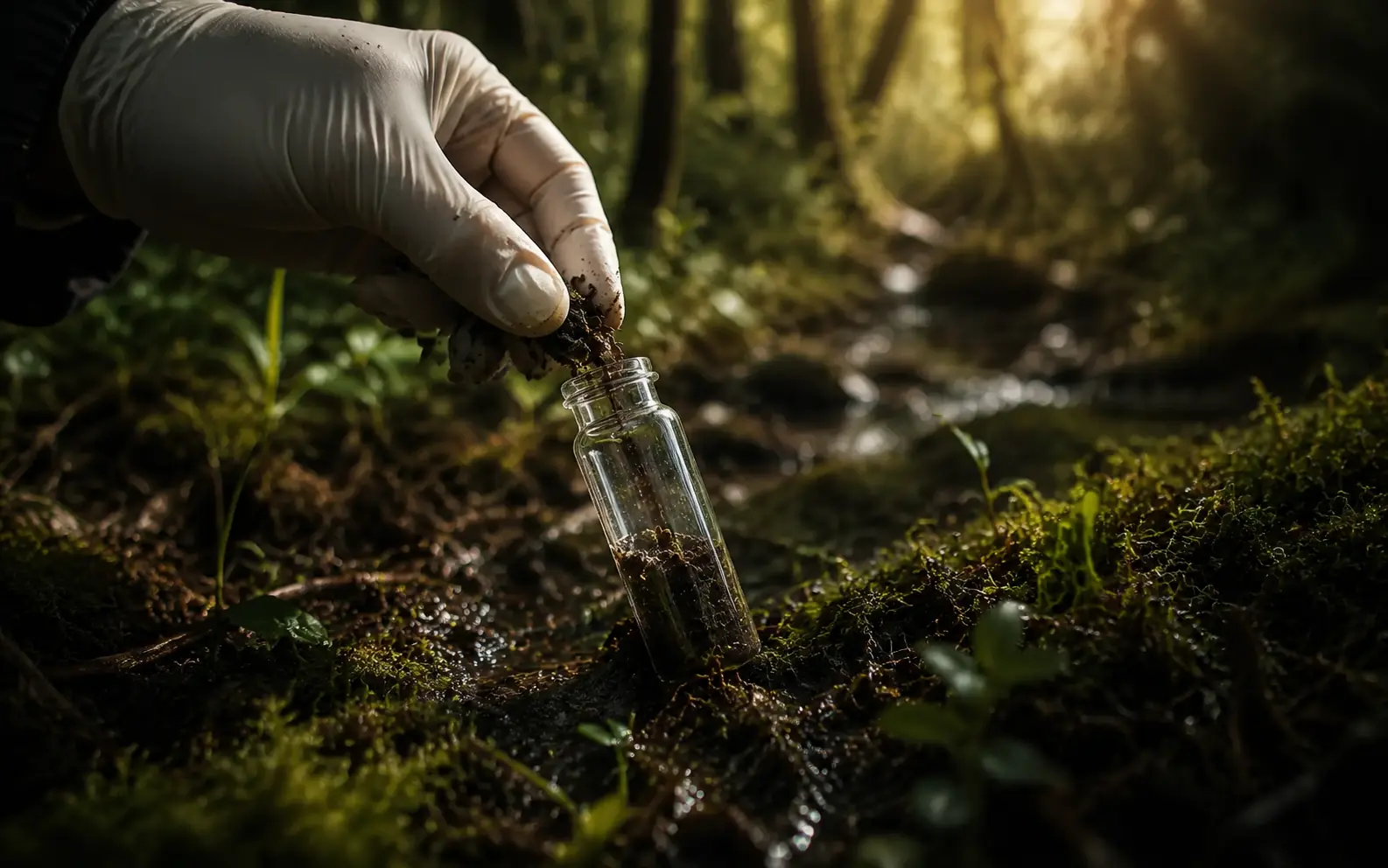
Collect material deliberately while recording where it came from and how it was handled.
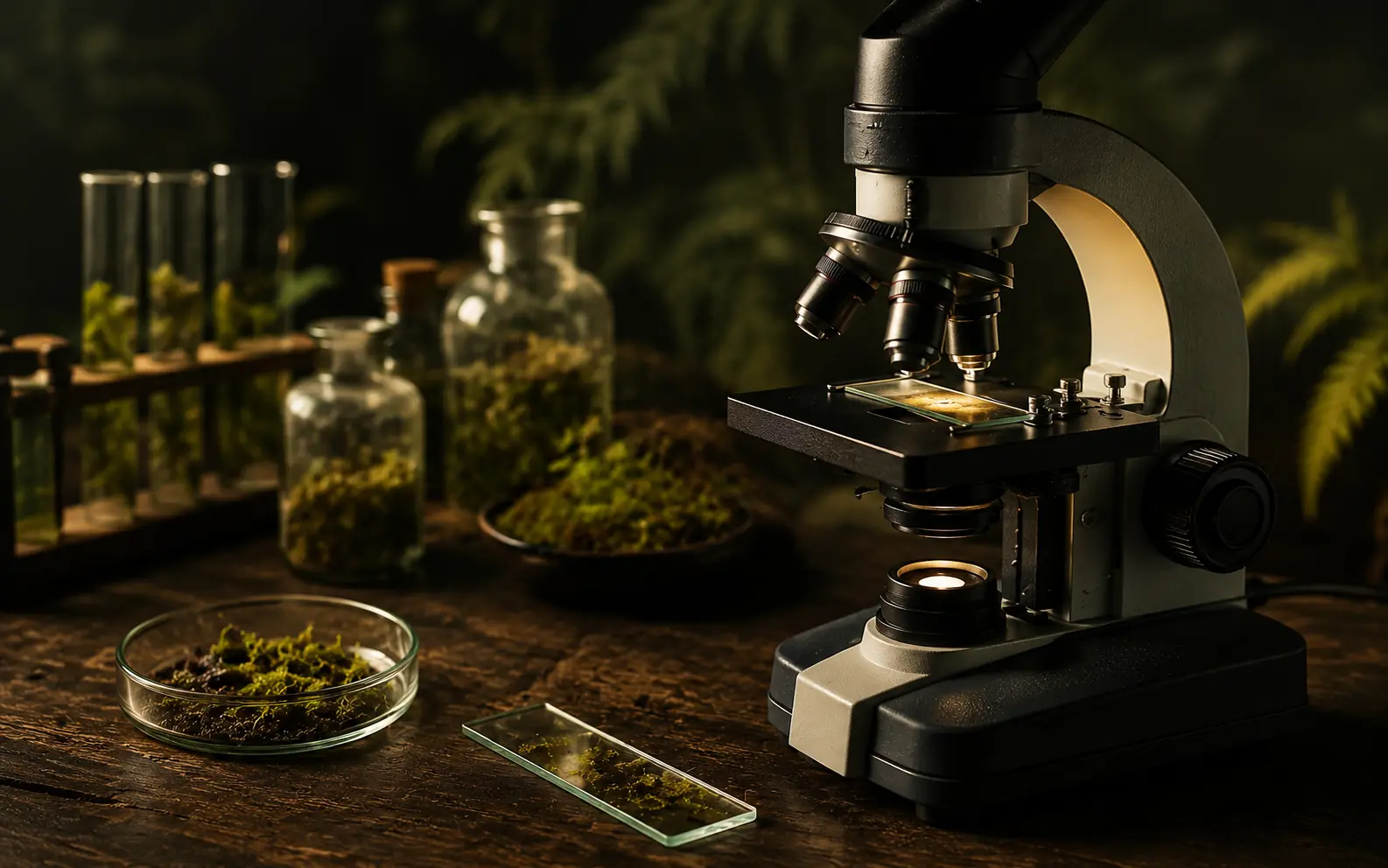
Examine structures and interactions that are not visible to the unaided eye.
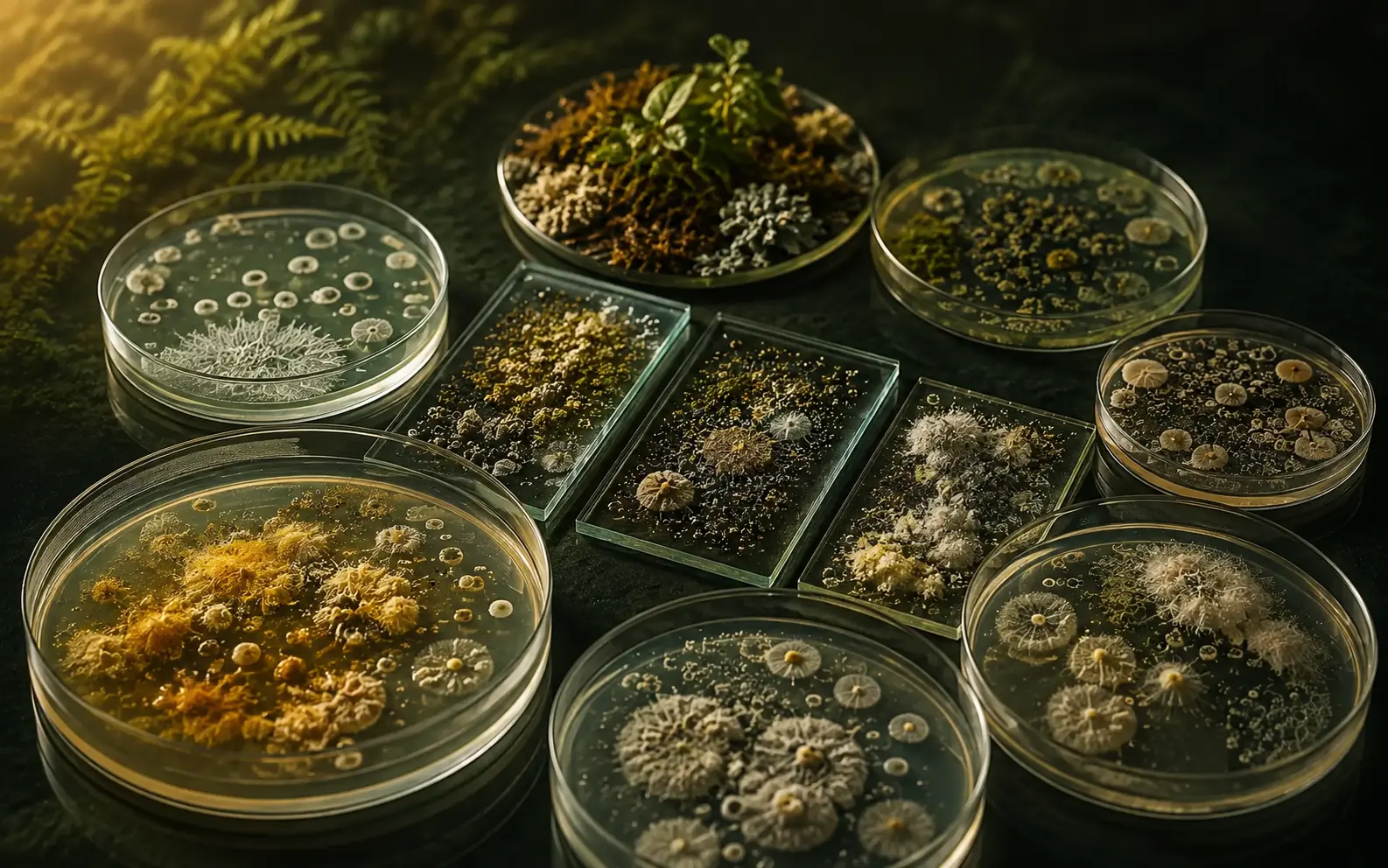
Compare patterns, controls and variation before deciding what the evidence supports.
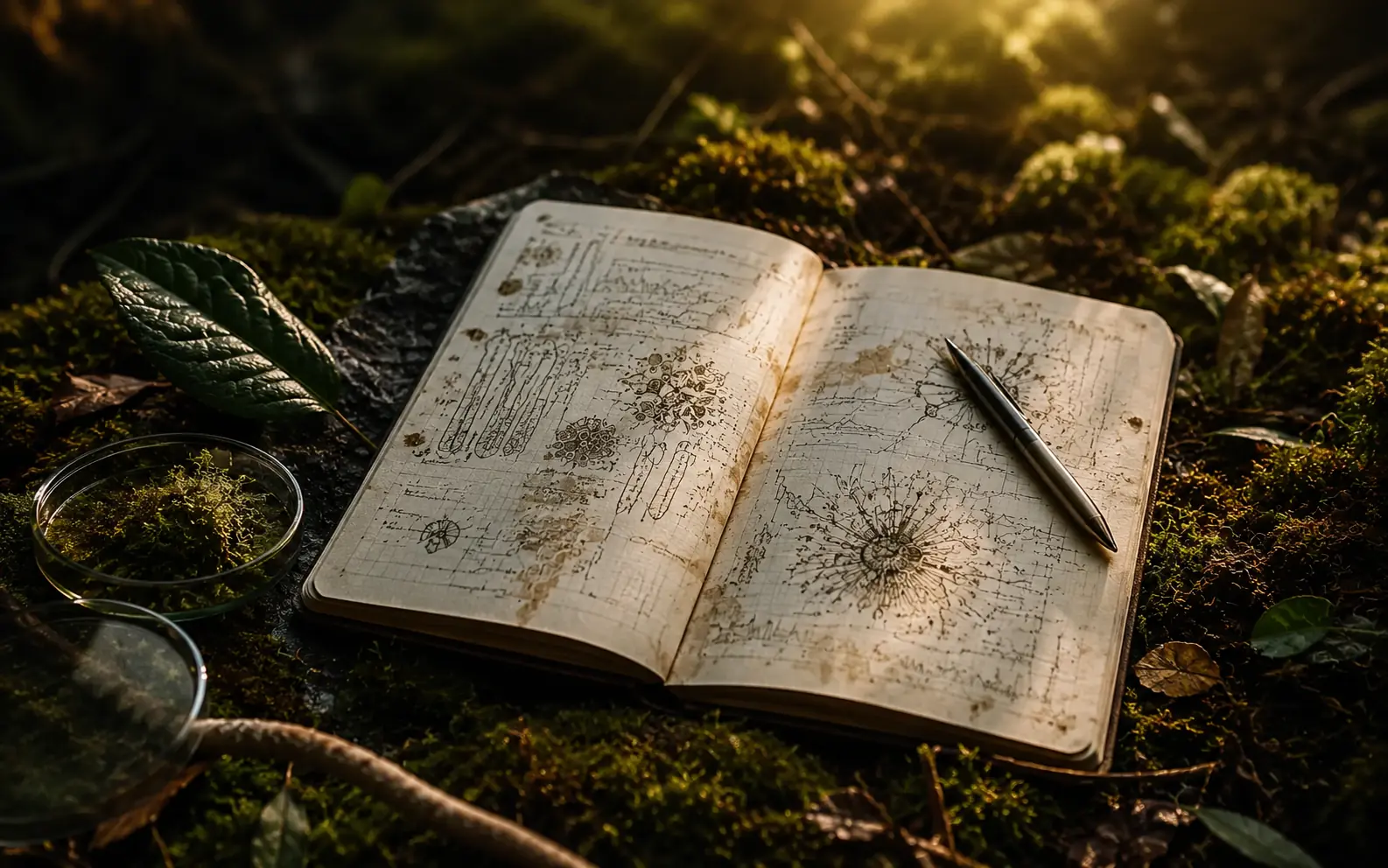
Keep methods, observations and limitations visible so the work can be understood and revisited.
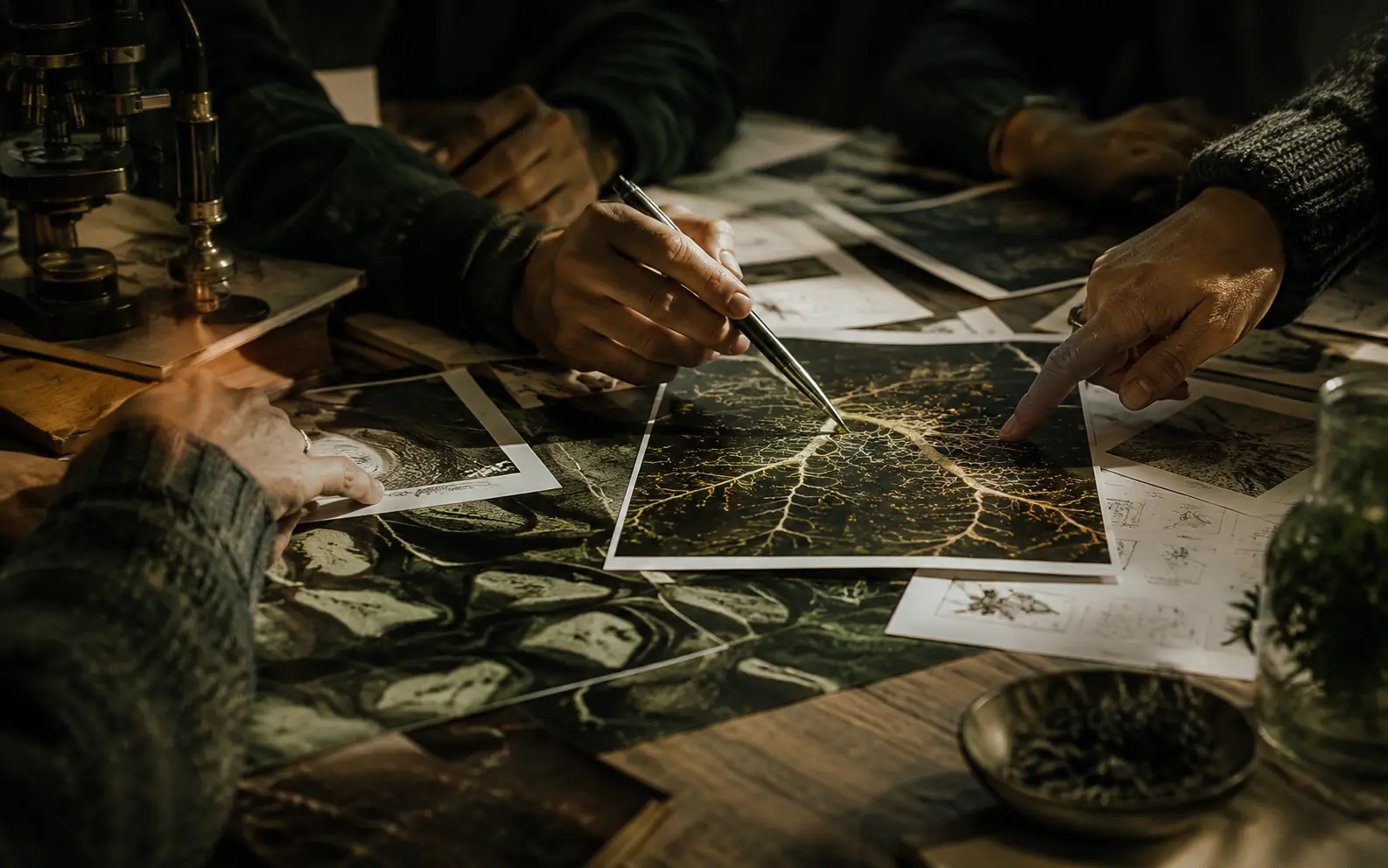
Interpret findings together, challenge assumptions and refine the next question.
SCIENTIFIC INTEGRITY
MICROBA may explore possibility without presenting it as established fact. We distinguish observation, interpretation and evidence—and keep uncertainty visible when the work is still unfolding.

CONTINUE THE INQUIRY
Explore how MICROBA moves from living observation toward disciplined research and responsible knowledge.