
Complexity
Begin with a naturally complex bee-derived matrix: sugars, water, acids, aromatic compounds and material gathered from the living environment.

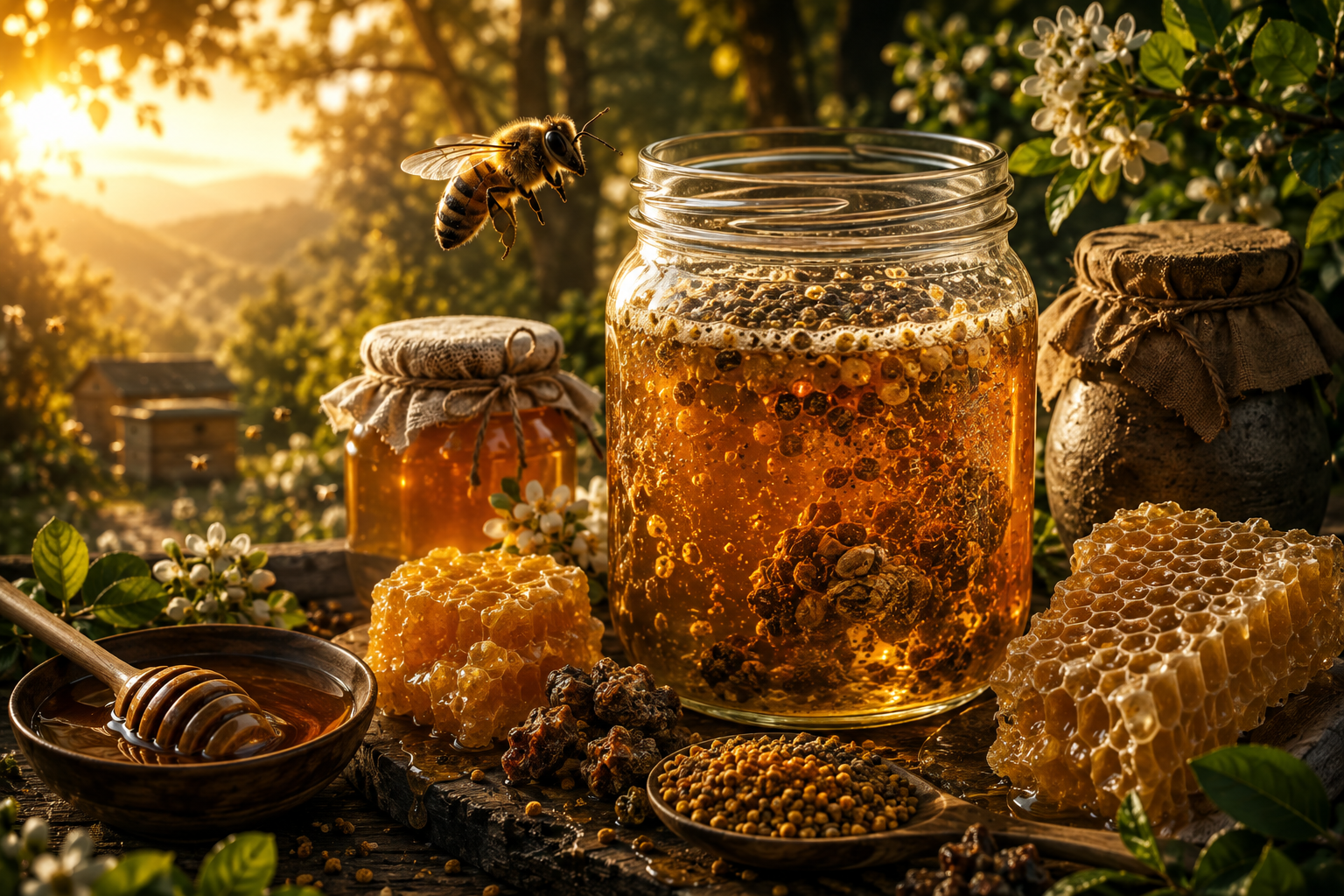
HONEY BEE FERMENTATION
The Inverse Cycle: from complexity to controlled transformation.
MICROBA explores fermentation through bee-derived ingredients, microbial ecology, time and observation. The process is not about forcing nature. It is about understanding the conditions under which living systems transform material safely and meaningfully.
THE INVERSE CYCLE
The Inverse Cycle is MICROBA's interpretive framework for reading fermentation as a directional process: begin with a complex natural matrix, create controlled conditions for change, observe the transformation, refine the endpoint, and return the result to its source context.
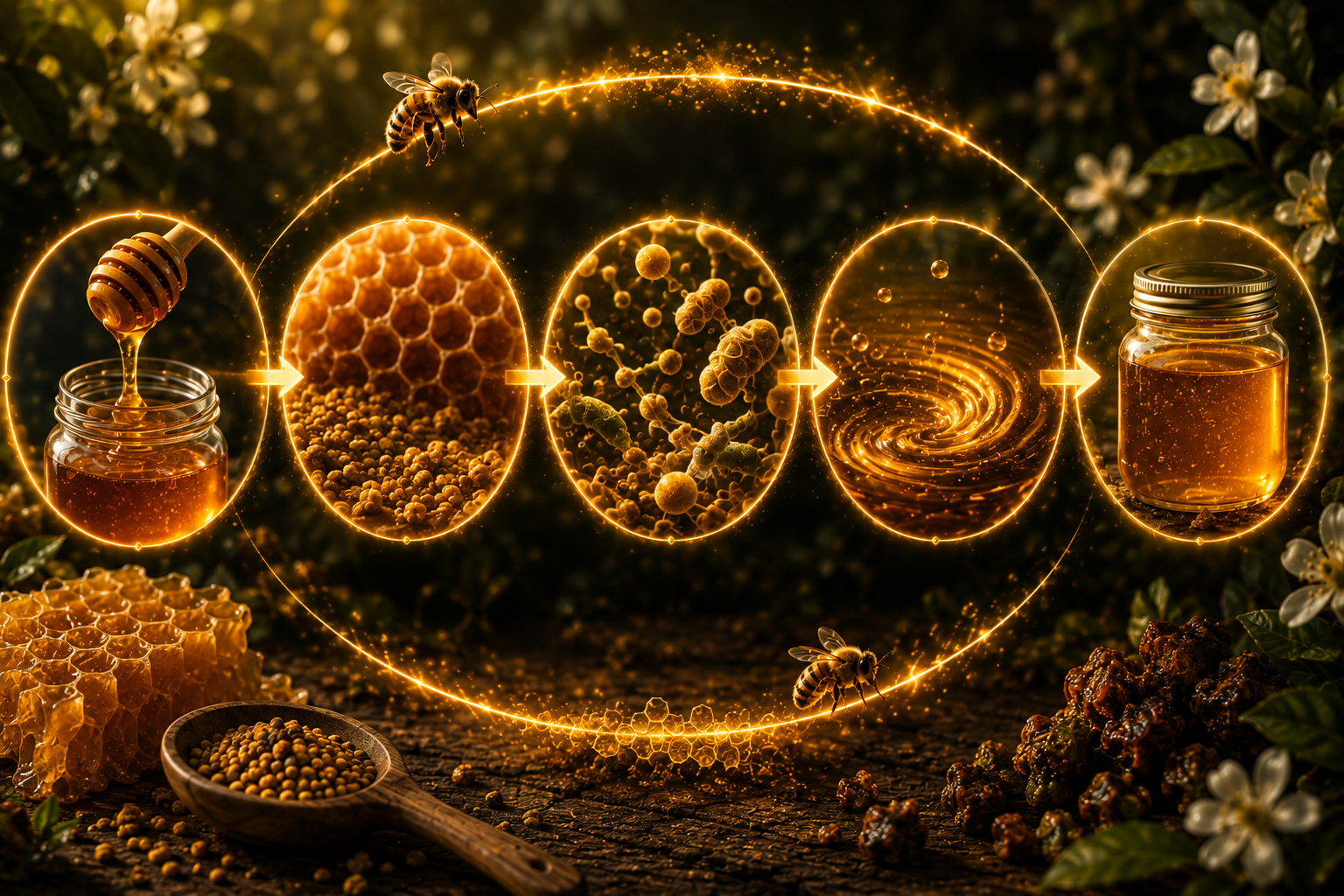
Begin with a naturally complex bee-derived matrix: sugars, water, acids, aromatic compounds and material gathered from the living environment.
Shift from collecting complexity to creating the conditions in which selected microorganisms and enzymes can act in a controlled direction.
Fermentation changes available substrates over time, producing new acids, aromas and other metabolites while the matrix itself evolves.
Observe acidity, activity, aroma, stability and safety. The aim is not simply more change, but a controlled and understandable endpoint.
The finished expression remains connected to its source while carrying a new sensory and biochemical character created through time.
Framework note. "Inverse Cycle" is MICROBA terminology, not a standard scientific name for fermentation. Scientific claims on this page are kept separate from the framework itself.
BEE-DERIVED MATERIALS
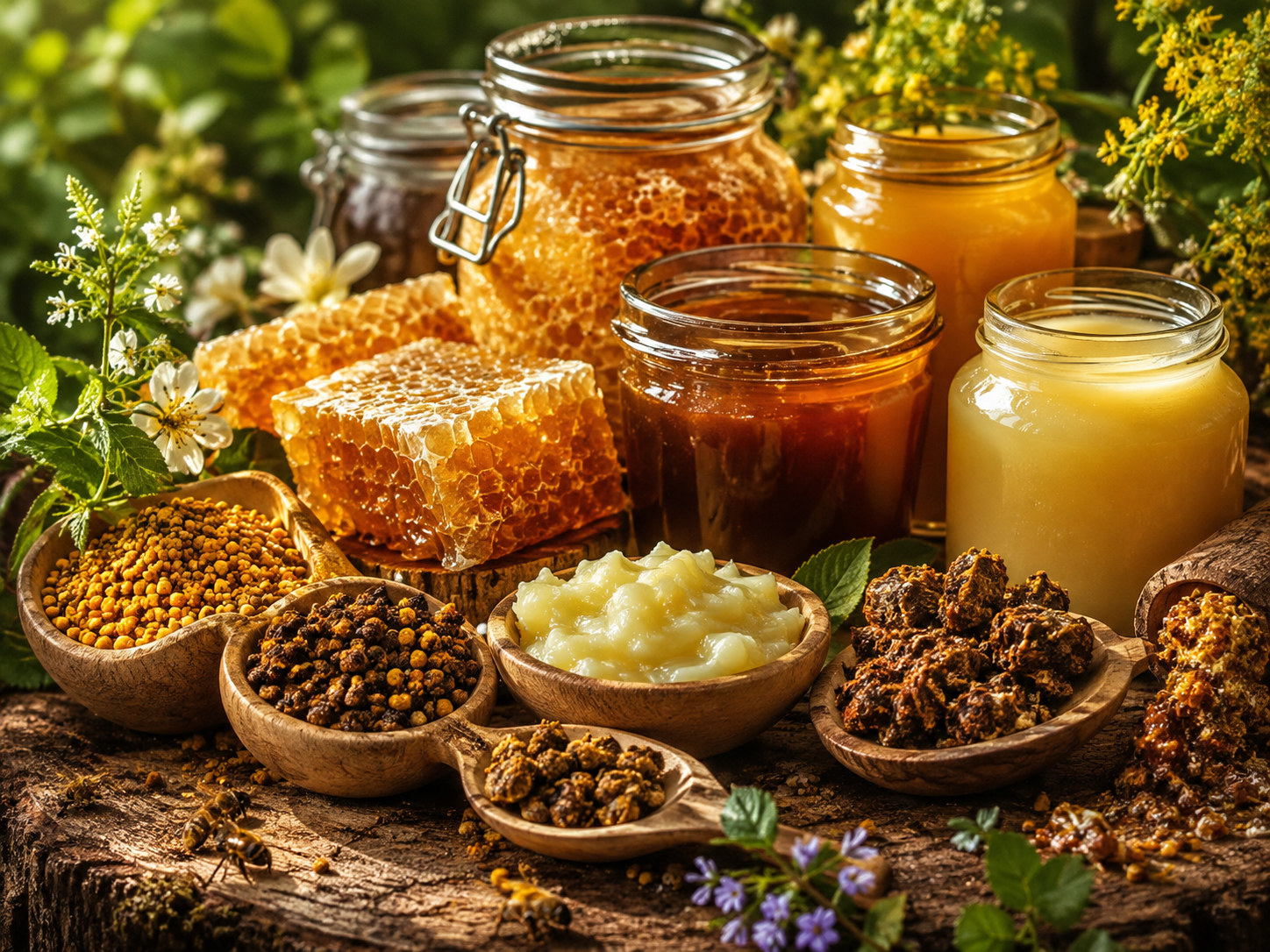
The hive contains materials with very different chemistry, moisture, structure and biological roles. MICROBA treats them as distinct starting realities rather than assuming they behave the same way in fermentation.
Some are naturally transformed inside the colony, such as bee bread. Others require carefully designed conditions before they can participate in a controlled food process.
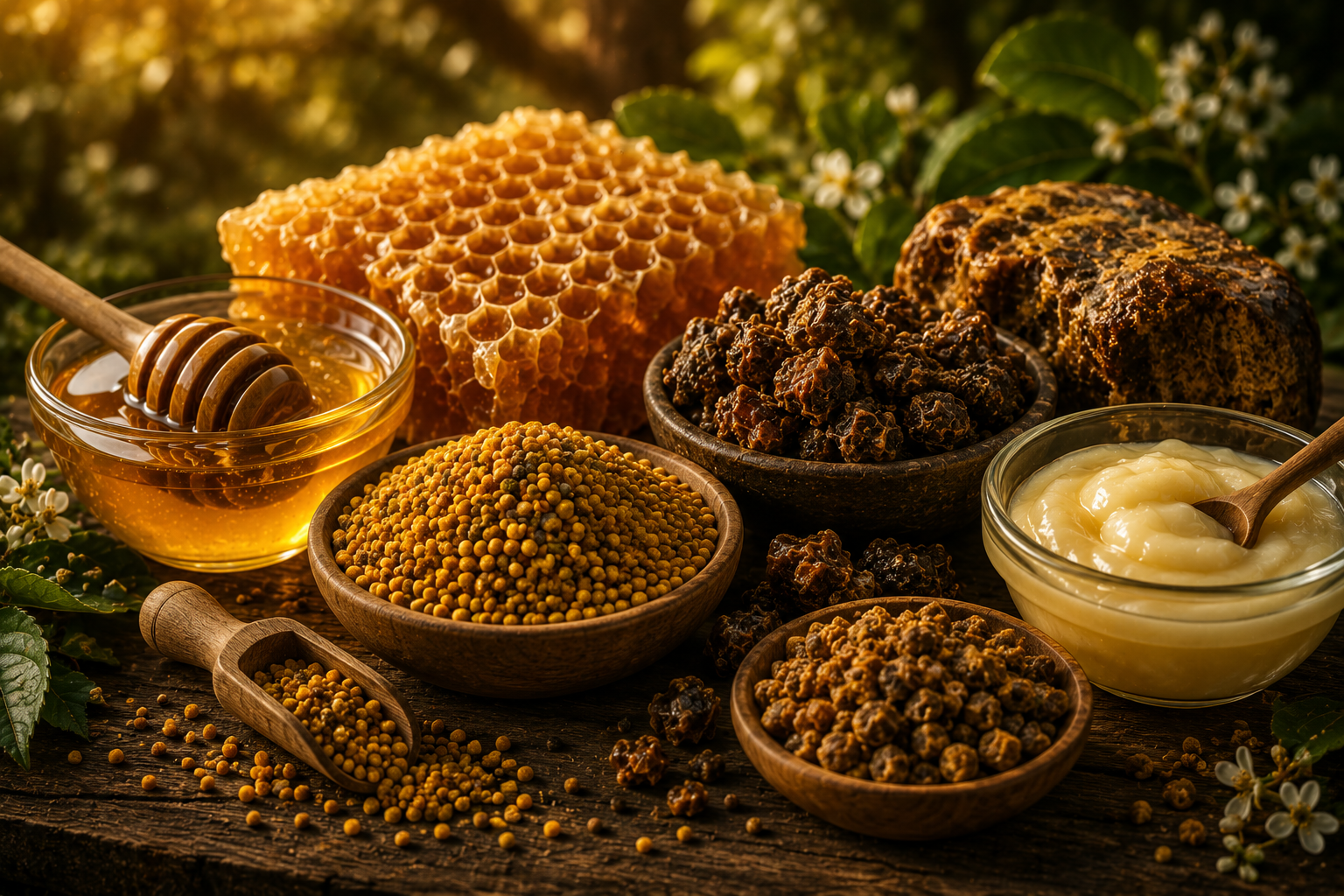
A concentrated sugar matrix shaped by floral source, bee activity, enzymes, moisture and storage conditions.
Plant-derived granules collected by bees, carrying proteins, lipids, carbohydrates and diverse botanical compounds.
A resin-rich material bees assemble from plant sources and use throughout the hive environment.
A nutrient-rich secretion produced by worker bees for colony development and queen nourishment.
Stored pollen transformed inside the comb through moisture, hive conditions and microbial activity.
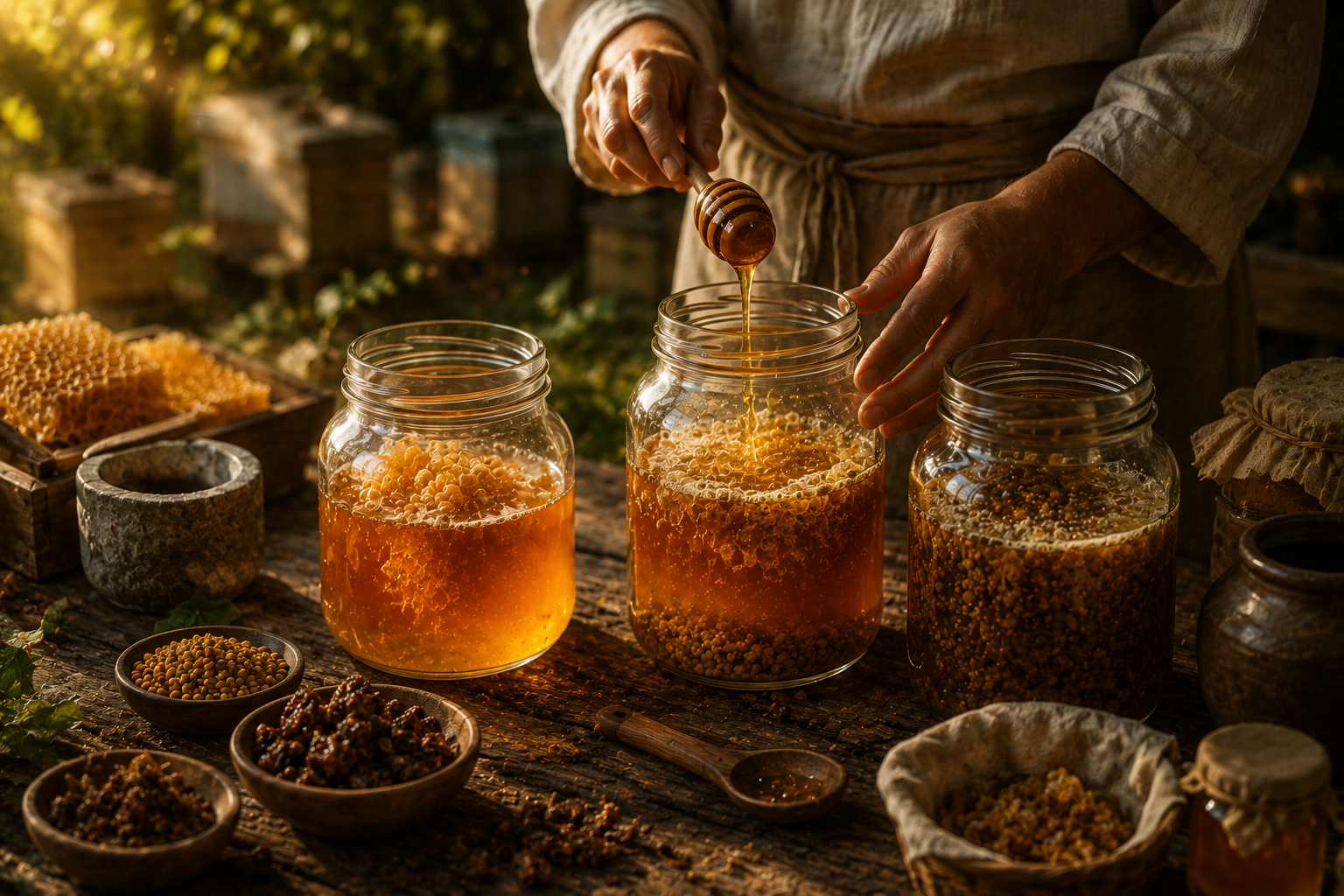
A CONTROLLED PROCESS
Fermentation is a biological process, but safe food production depends on designed conditions. Time alone is not a control measure.
Define the ingredient, water activity, vessel, culture strategy and sanitation requirements before fermentation begins.
Create suitable conditions for the intended fermentation rather than assuming raw honey will ferment safely on its own.
Track time, temperature, acidity, aroma and visible activity while protecting the batch from unwanted contamination.
Stop, chill, strain, stabilize or package according to the validated process and the intended final product.
THE INVISIBLE WORKERS
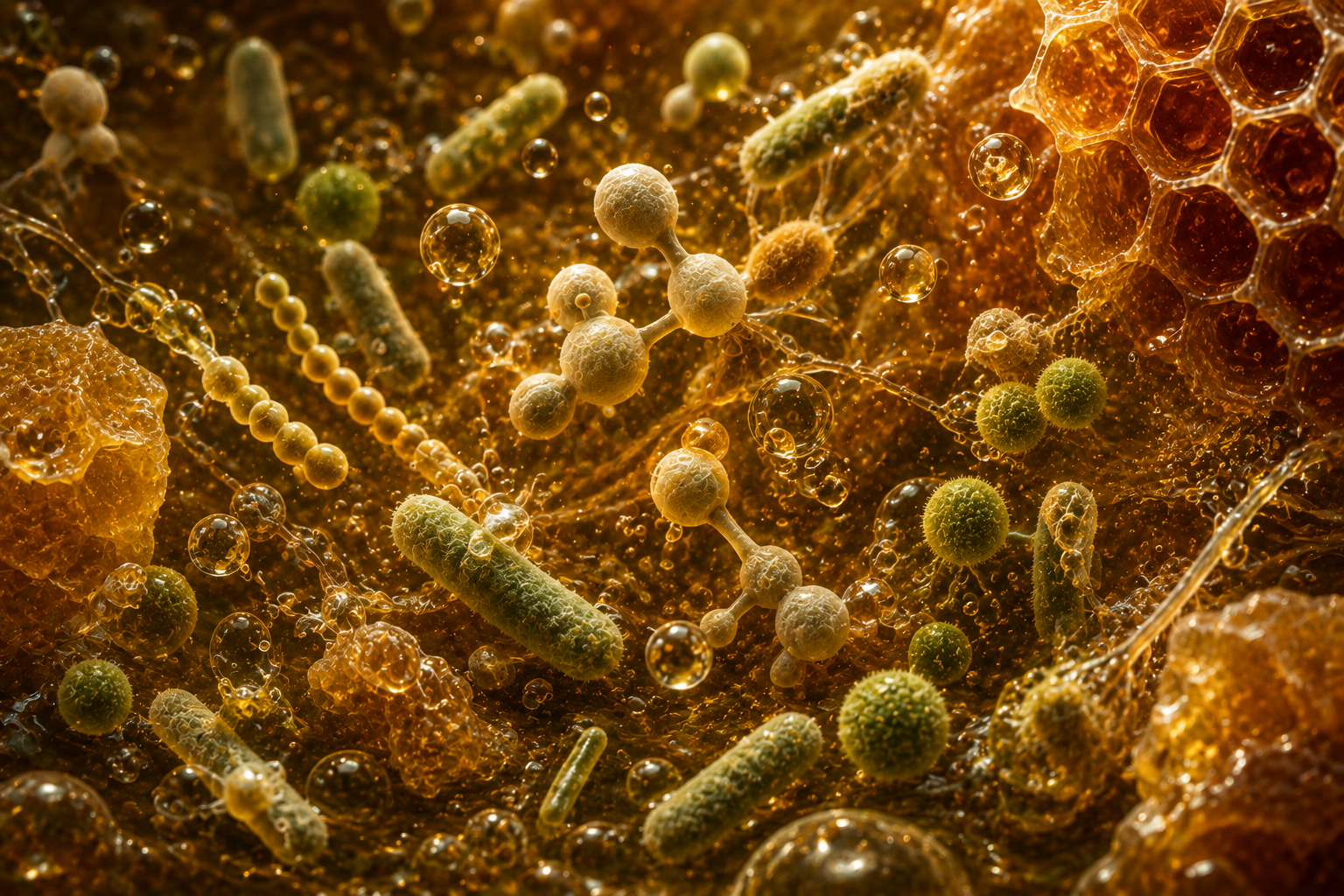
Raw honey is naturally concentrated and usually has low water activity, which limits the growth of many microorganisms. A controlled honey fermentation therefore depends on the recipe, moisture, culture, temperature, acidity and process design.
Yeasts and bacteria can transform sugars and other compounds when conditions support them. MICROBA's interest is in the relationship between the starting matrix, the microbial community and the environment that shapes the outcome.
LIVING VALUE
The value of fermentation should be described by what can actually be observed and measured. MICROBA therefore focuses on changes in sensory character, chemistry and stability rather than treating "fermented" as an automatic health claim.
Fermentation can generate new volatile compounds and a more layered sensory profile.
Organic acids can shift flavor, pH and the ecological conditions inside the ferment.
Changes in sugars, suspended material and gas can alter body, clarity and mouthfeel.
Microbial metabolism can create or transform compounds that become part of the finished matrix.
FERMENTATION REQUIRES CONTROL
Home fermentation, infant feeding and products intended for sale can involve specific food-safety requirements. This page explains a concept and does not provide a production recipe, preservation schedule or safety validation.

RETURN TO ORIGIN
Fermentation becomes meaningful when observation, evidence and respect for living systems move together.