Dispersal Moves the Seed
The seed leaves the parent plant and may travel through many mechanisms before reaching a new location.

PLANT — TRANSITION
PERSPECTIVE 04 OF 04
Dispersal ends when potential becomes established in habitat.
A seed can travel by wind, water, animals, gravity or other means. TRANSITION is completed when dispersal gives way to physical establishment in a suitable substrate or habitat — before dormancy or germination begins.
OBSERVE THE TRANSITIONOBSERVATION
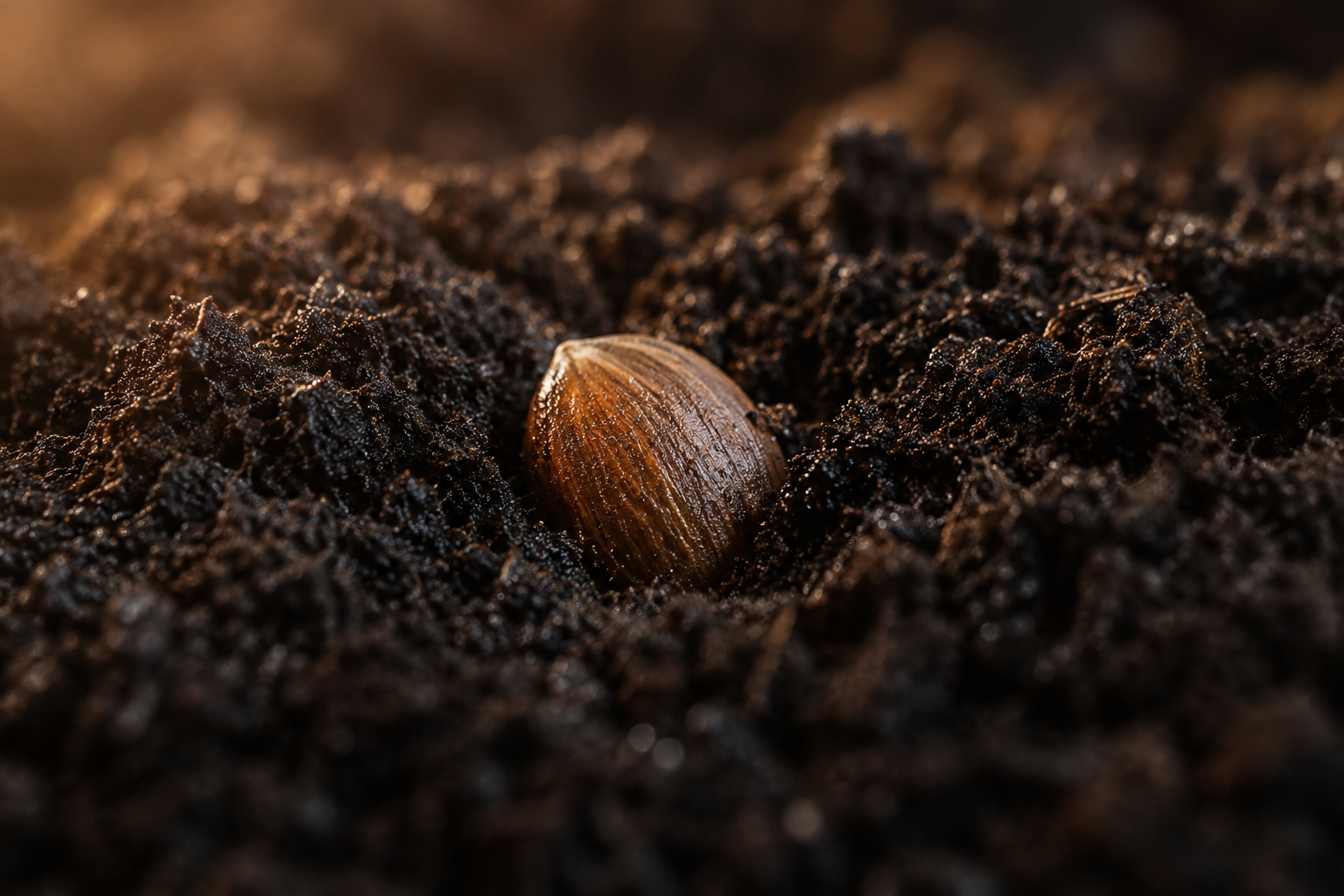
A seed reaching soil does not mean visible growth has begun. First it must become physically positioned within environmental conditions that may later permit rest, persistence or germination.
The seed leaves the parent plant and may travel through many mechanisms before reaching a new location.
Contact with soil or another suitable substrate places the seed within a local microenvironment rather than leaving it in continued transit.
Moisture, temperature, oxygen, light, burial depth and other requirements vary among species. Arrival creates possibility; it does not guarantee germination.
THE TRANSITION
The PLANT perspective expresses TRANSITION with exceptional clarity: potential moves away from its source, reaches a destination and becomes physically established there.
The mature seed is carried away from the parent plant and its original position.
Movement ends when the seed reaches soil or another habitat capable of holding it.
Physical settlement creates the local conditions in which the next stage may unfold.
STAGE BOUNDARY
TRANSITION ends with establishment in habitat. Waiting, physiological dormancy, imbibition and germination are later processes and should not be completed here.
The journey through dispersal has ended. The seed is physically established within a substrate or habitat relevant to its species.
The next stage examines the protected or inactive period after arrival, before the conditions for awakening and germination are fulfilled.
MICROBA PERSPECTIVE
In MICROBA’s framework, the seed makes the principle of TRANSITION visible: leaving is only half the movement. Continuation depends on becoming established in conditions that can support what comes next.
This is why TRANSITION is described as moving into the original habitat. The emphasis is not a return to the past, but entry into the appropriate conditions for the living cycle to continue.
Movement becomes meaningful when potential arrives in the conditions that can carry continuation forward.
Scientific boundary: ordinary soil is not the universal germination habitat for every plant species. The page uses soil as the canonical visual archetype while recognising species-specific substrates and requirements.