
Host Dialogue
Microbes and human tissues continually exchange chemical and immune signals. Researchers study these interactions rather than treating the microbiome as a separate organ.
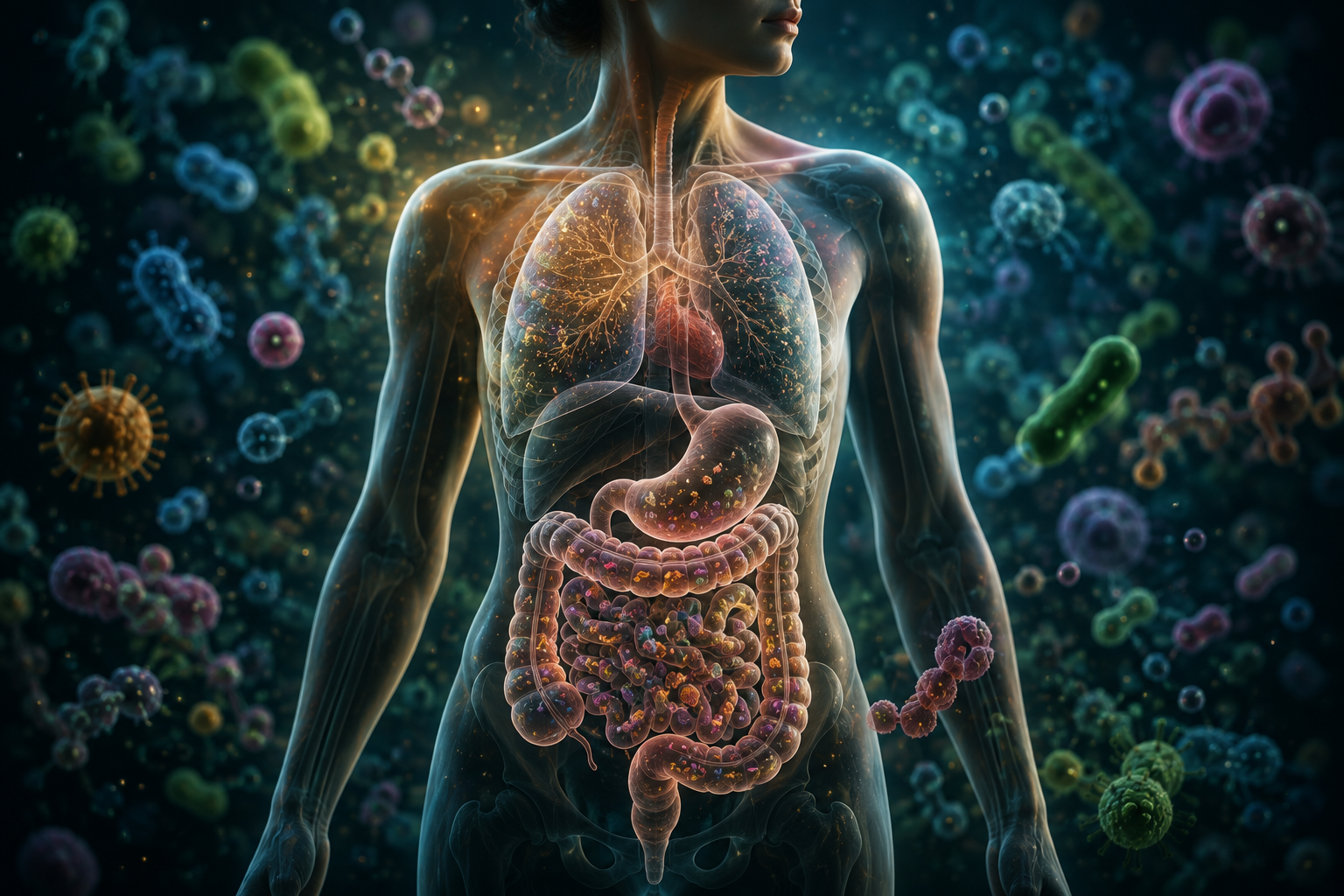
THE LIVING WORLD WITHIN
Invisible communities. Living relationships.
The human body hosts complex microbial communities across the gut, mouth, skin and other habitats. MICROBA explores how these communities vary, interact and change—without reducing health to a single organism, food or score.
Educational overview only. Illustrations are conceptual and are not diagnostic anatomy or medical guidance.
THE MICROBIOME IS NOT ONE THING
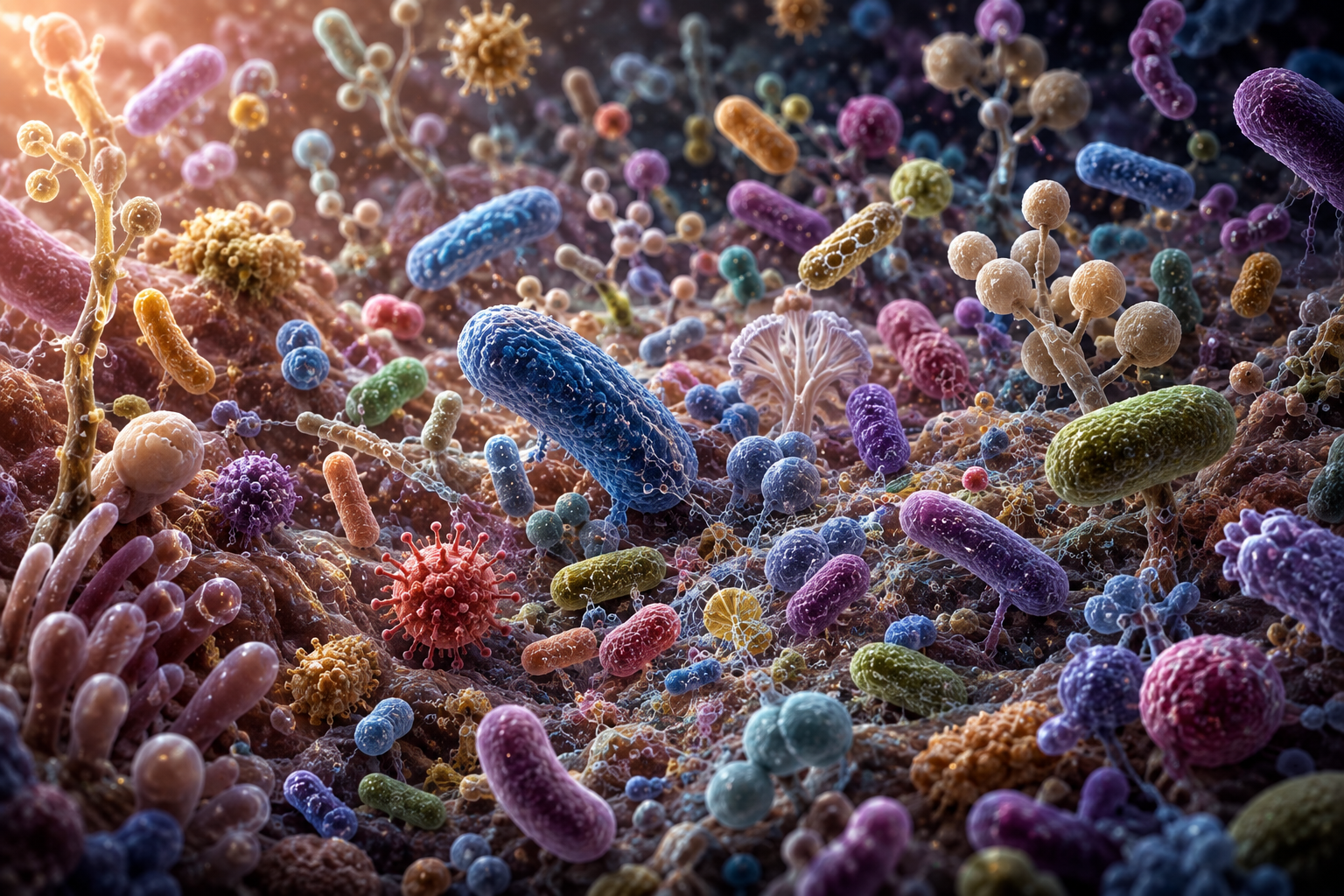
Microbiome is a collective term for microorganisms and their genetic material within a defined environment. Human-associated communities can include bacteria, archaea, fungi and viruses, and their composition differs strongly from one body habitat to another.
Even among healthy people, there is substantial variation. That diversity is why MICROBA approaches the subject through relationships, context and evidence rather than a universal “ideal” microbiome.
Observe the system before assigning meaning to a single microbe.
FOUR RELATIONSHIPS TO UNDERSTAND
The microbiome is not a passive passenger. It exists inside changing physical, chemical and social environments created by the host and the world around us.
Microbes and human tissues continually exchange chemical and immune signals. Researchers study these interactions rather than treating the microbiome as a separate organ.
The gut contains dense microbial communities that interact with dietary material and produce metabolites that become part of the local intestinal environment.
Microbial metabolism can transform nutrients and other compounds. The effects depend on the organisms present, the host, the diet and the surrounding conditions.
There is no single universal microbiome. Communities differ by body site and person and can shift over time with age, diet, medicines, environment and other exposures.
WHERE MICROBES LIVE
Human-associated microbial communities are strongly organized by body habitat. The gut is important, but it is only one part of a wider microbial landscape.
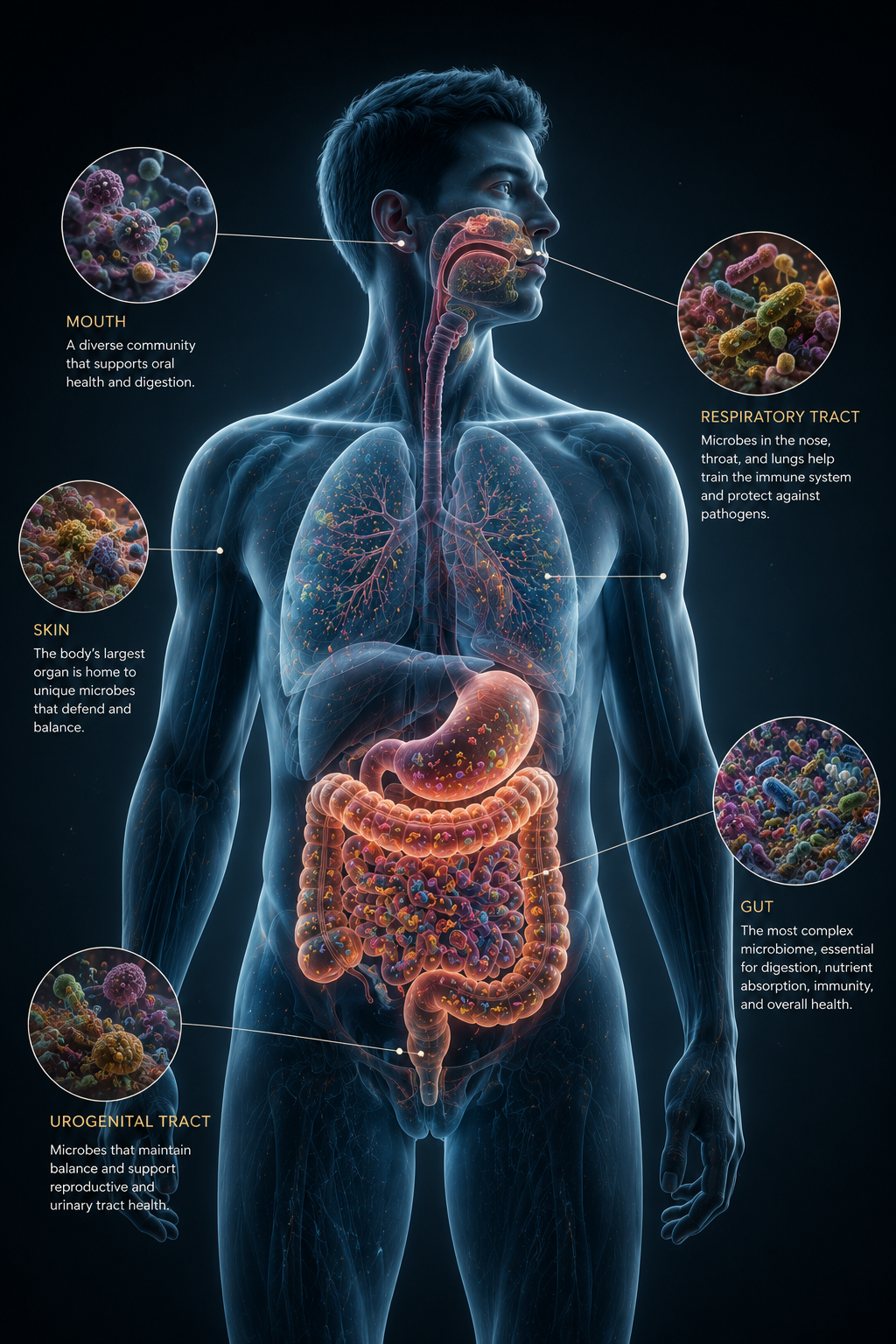
A highly diverse habitat shaped by saliva, teeth, gums, diet and daily oral conditions.
Different skin regions support different communities depending on moisture, oil, exposure and local chemistry.
Microbial communities are studied across the respiratory tract, with composition varying by location and health context.
The intestinal microbiome is one of the most densely populated and most intensively studied microbial habitats in the body.
WHY CONTEXT MATTERS
Microbial communities can shift when their environment changes. Some changes are temporary, some are persistent, and the same change does not necessarily mean the same thing for every person.
Research therefore looks at patterns across time, host biology and environmental context instead of treating any one snapshot as a complete answer.
Food patterns and dietary components can change the resources available to gut microbes.
Antibiotics and other medicines can alter microbial communities directly or indirectly.
Geography, exposures, household context and other environmental factors can shape microbial ecology.
Microbiomes are dynamic across life stages and can vary within the same person over time.
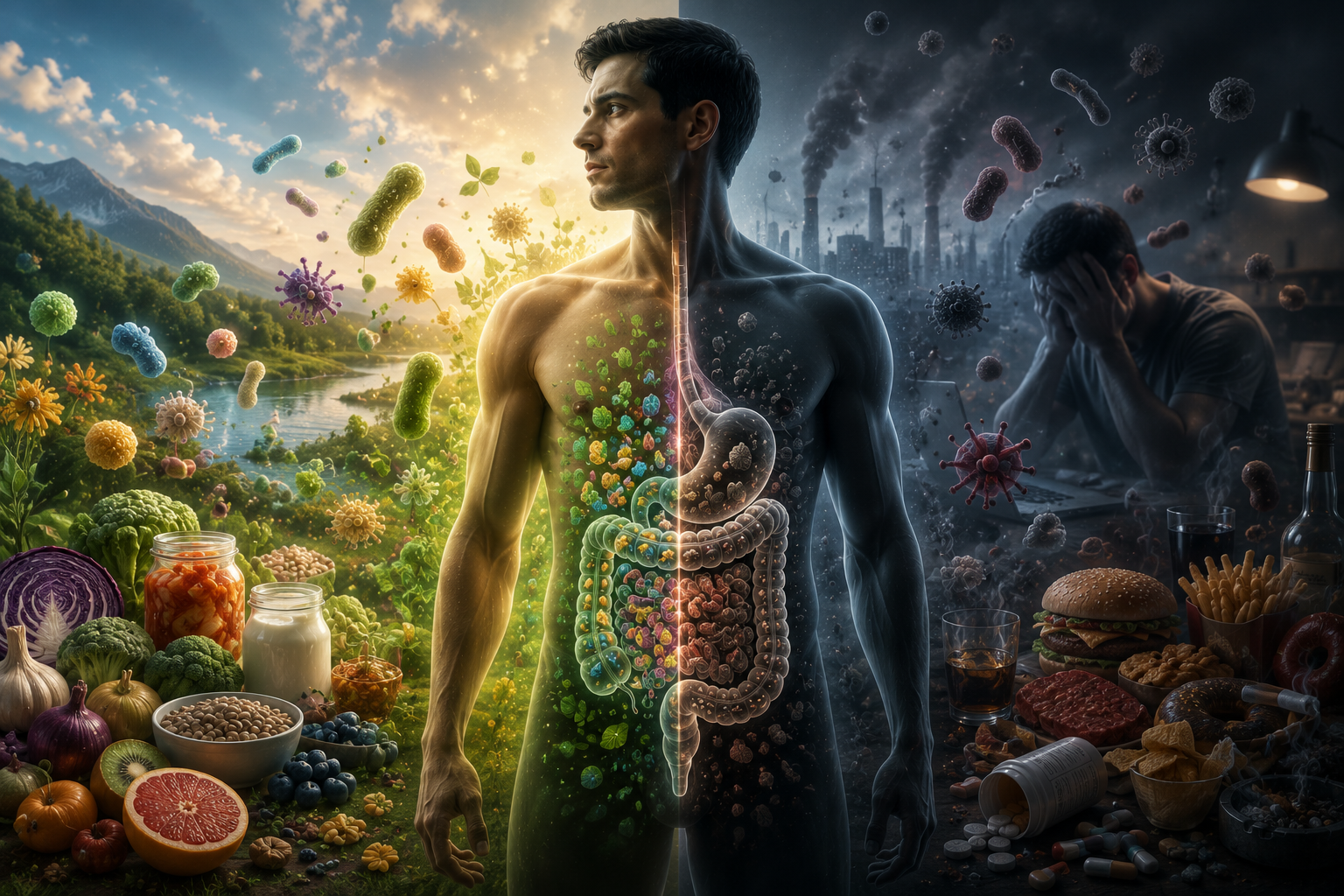

FOOD MEETS MICROBIAL ECOLOGY
Diet is one of many influences on the gut microbiome. Different foods supply different substrates to both the human host and microbial communities, and dietary patterns can be associated with changes in microbial composition and function.
No individual food, fermented product or supplement creates a universal “healthy microbiome.” MICROBA treats nutrition as one input inside a larger living system.
OBSERVE. MEASURE. COMPARE.
Modern microbiome research combines sequencing, microscopy, chemistry, computational analysis and carefully designed human studies. Each method answers a different question, and no single measurement captures the whole system.
Explore MICROBA Research
16S rRNA and metagenomic approaches help identify microbial lineages and genes within complex samples.
Researchers measure chemical products to study what microbial communities may be doing, not only which organisms are present.
Repeated sampling helps distinguish stable personal patterns from short-term change and population-level variation.

SMALL LIFE. WIDER CONTEXT.
The human microbiome is a reminder that health research is relational: host, microbes, food, environment and time all belong to the same question.