Approach and Contact
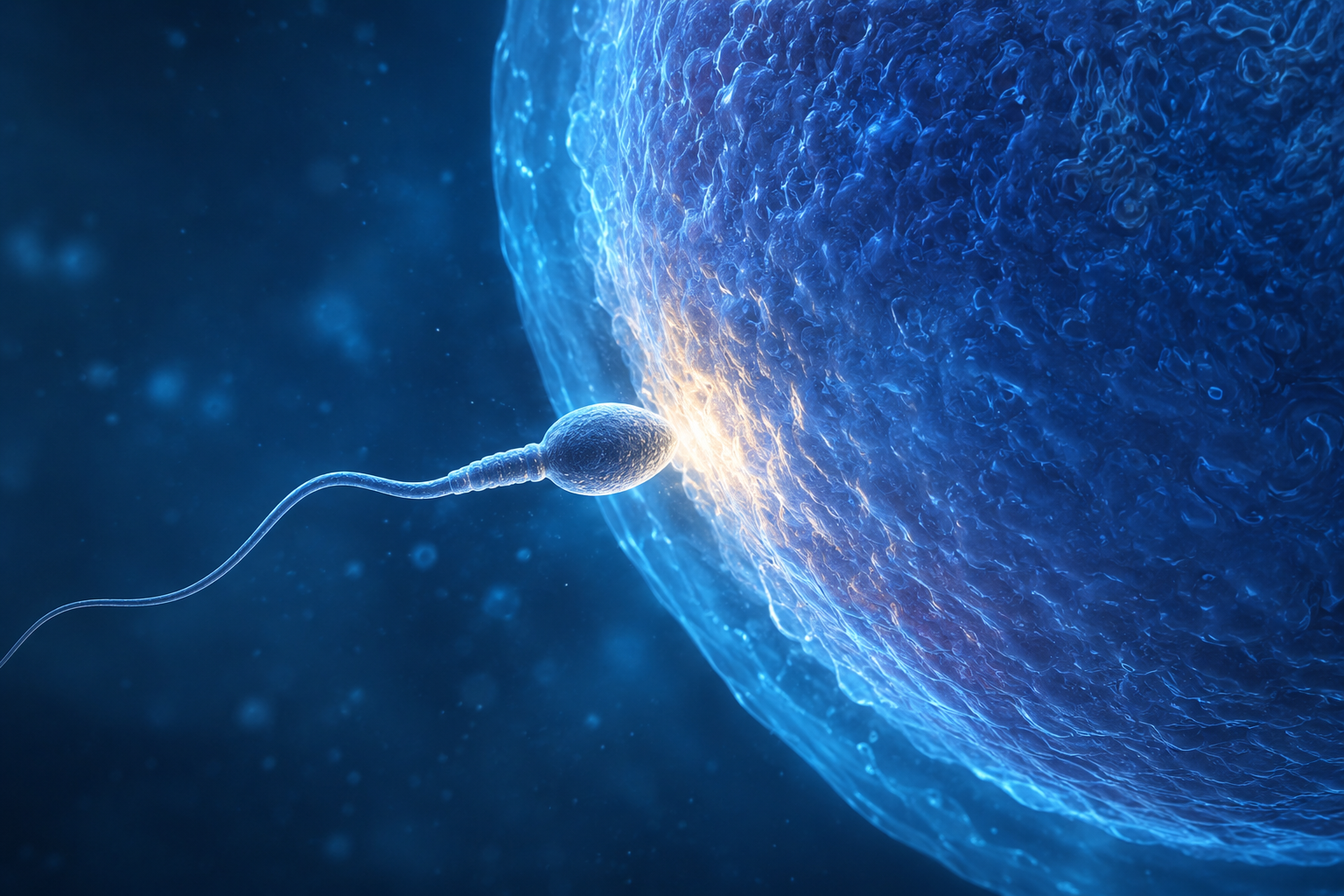
A sperm reaches the ovum and encounters the surrounding cellular and extracellular layers that form the immediate fertilisation environment.

HUMAN — TRANSITION
PERSPECTIVE 02 OF 04
Separate reproductive cells meet and a new state begins.
A sperm cell reaches the ovum and fertilisation brings paternal and maternal genetic contributions into a new zygotic state. TRANSITION is the encounter and fusion — not the later course of embryonic development.
OBSERVE THE TRANSITIONOBSERVATION
The ovum is not simply a destination. Successful fertilisation requires approach, interaction with the ovum’s surrounding structures, membrane-level recognition and fusion.
A sperm reaches the ovum and encounters the surrounding cellular and extracellular layers that form the immediate fertilisation environment.
Successful fertilisation depends on specific molecular and membrane interactions that permit sperm–ovum fusion.
Maternal and paternal genetic contributions are brought together. In the typical human case, each gamete contributes a haploid set of 23 chromosomes.
THE TRANSITION
The HUMAN transition is defined by relationship. Movement becomes biologically meaningful only when the two specialised cells successfully interact.
The journey brings the paternal reproductive cell into the immediate maternal reproductive environment.
Cellular interactions determine whether fertilisation can proceed.
Fusion changes the biological state from two separate gametes to a fertilised ovum.
STAGE BOUNDARY
The page ends with the new zygotic state. Cleavage, implantation and prolonged development belong to later parts of the HUMAN journey rather than being completed inside TRANSITION.
The defining transition has occurred: two separate reproductive cells have successfully produced a new zygotic condition.
The next stage follows protected development within the maternal environment rather than continuing the fertilisation event itself.
MICROBA PERSPECTIVE
In MICROBA’s framework, the HUMAN perspective makes the role of relationship especially visible. Potential carried by one cell does not continue alone; the decisive transition occurs through successful encounter with another specialised cell.
TRANSITION therefore represents more than travel. It is the change in condition created when separate contributions meet in the relationship required for continuation.
Potential travels separately. Continuation begins when the required relationship is established.
Scientific boundary: the chromosome count described here is the typical human haploid arrangement. This page intentionally stops at fertilisation and the zygotic state.