
Food Processing
Gut microbes can help transform components of pollen and other dietary material into compounds available within the digestive ecosystem.
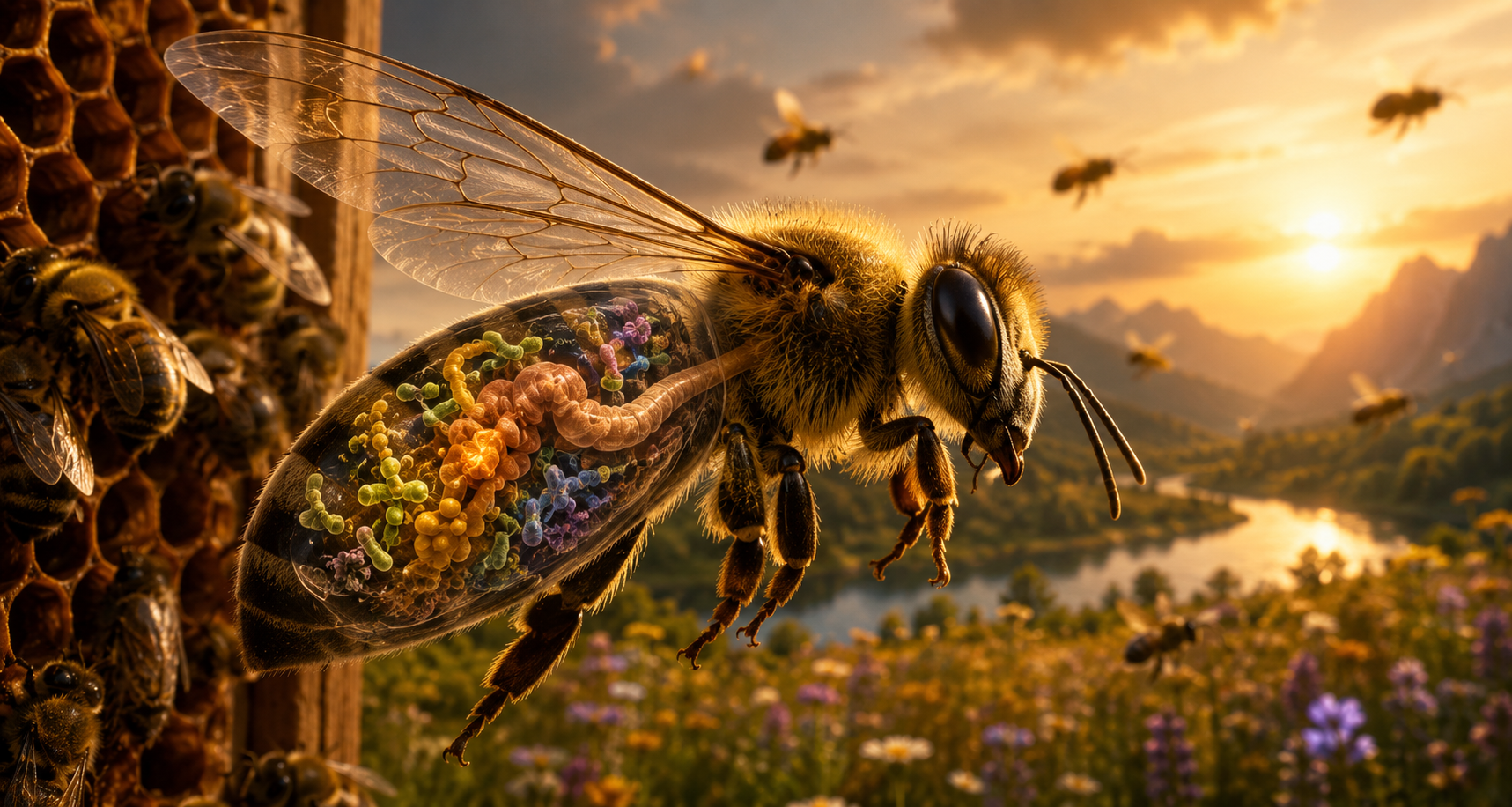
LIFE WITHIN THE BEE GUT
A living ecosystem inside every adult worker bee.
Core gut microbes occupy distinct regions of the digestive tract, where they interact with food, the gut environment and the bee itself. MICROBA explores this invisible world as a living system—not as a single organism or a single answer.
Scientific visualisations on this page are illustrative and are not anatomical scale models.
THE INVISIBLE ALLIES
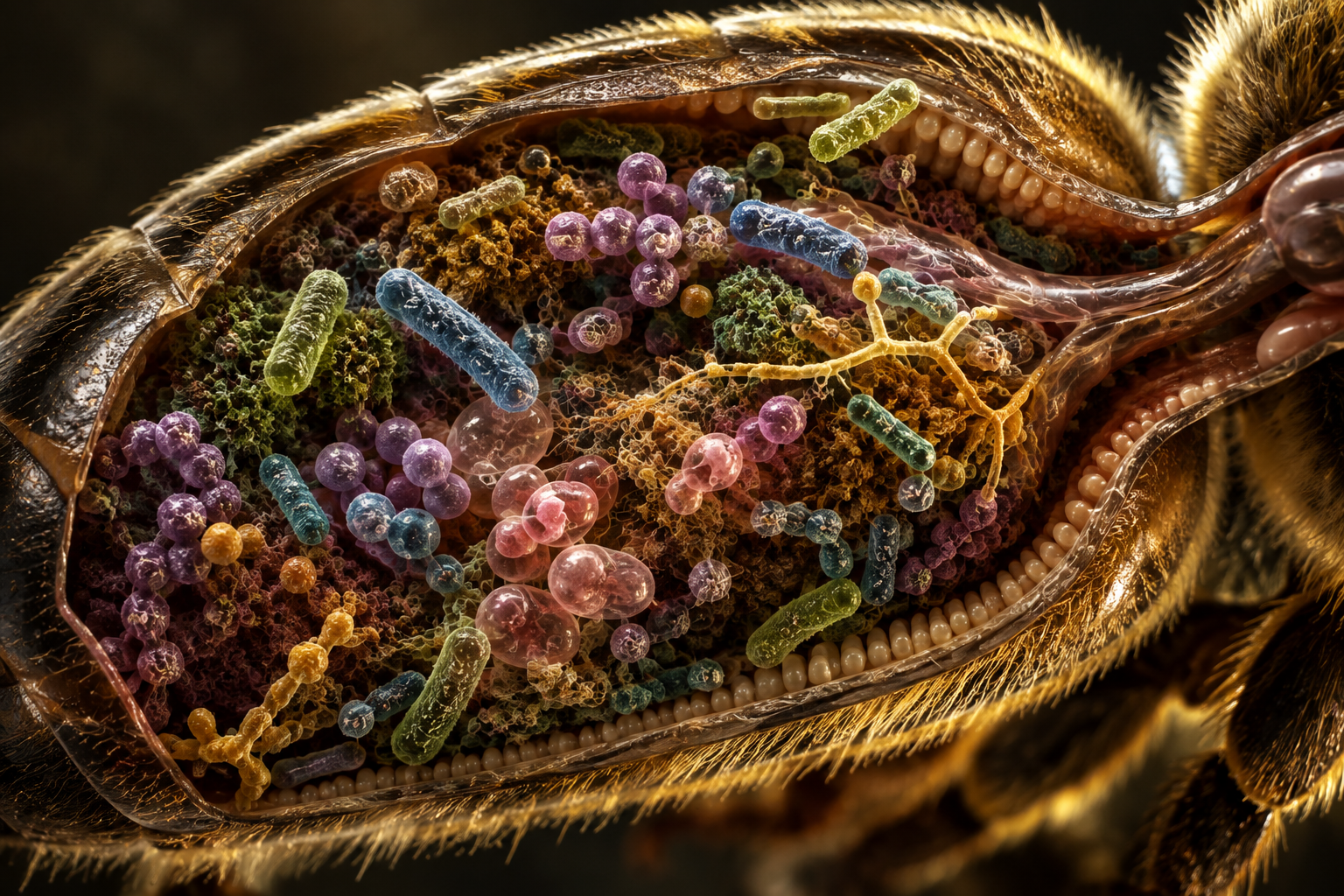
The adult honey bee gut contains a compact community of recurring, host-adapted bacteria, alongside other microorganisms that can vary with environment and life stage.
These microbes are not distributed evenly. The crop, midgut, ileum and rectum create different physical and chemical habitats, so each region tells a different part of the story.
To understand the bee, we also observe the relationships living within it.
FOUR RELATIONSHIPS TO OBSERVE
The microbiome is best understood through relationships between microbes, host biology, diet and environment.
Gut microbes can help transform components of pollen and other dietary material into compounds available within the digestive ecosystem.
A stable resident community can occupy gut niches and participate in interactions linked with immune function and pathogen resistance.
Different gut regions create different environments. Community structure changes with age, diet, season and other biological conditions.
The bee gut sits inside a larger system that includes diet, hive life, flowers, environmental exposure and social transmission.
A JOURNEY THROUGH THE GUT
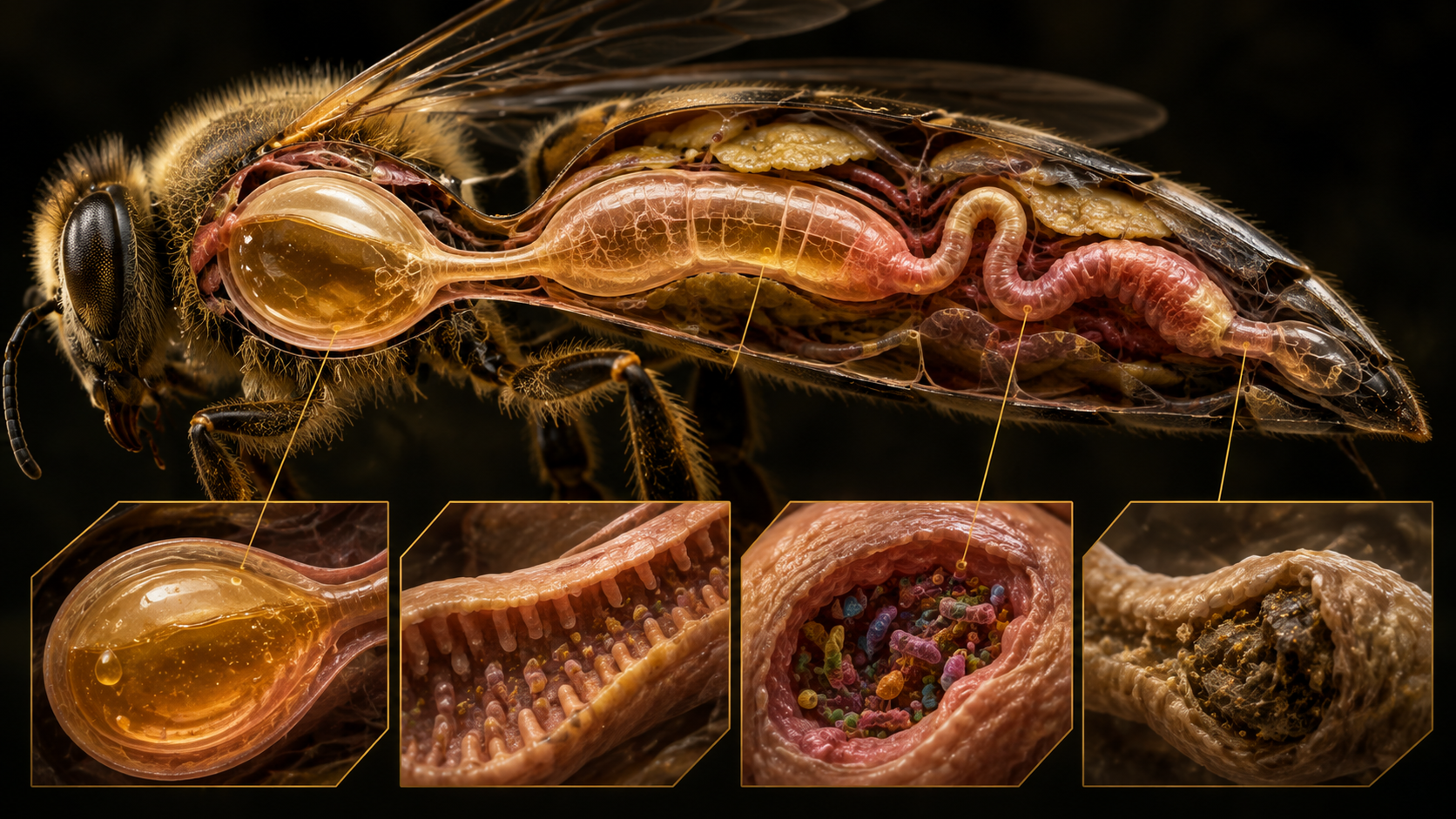
The adult digestive tract is not one uniform habitat. Its major compartments differ in function, microbial abundance and local conditions.
A temporary nectar-storage chamber. Microbes here are often more variable and exposed to material arriving from flowers and the hive.
A major site of digestion and absorption. Compared with the hindgut, it generally carries a smaller share of the dominant core bacterial community.
The first major hindgut chamber, where characteristic bee-associated bacteria form dense, spatially structured communities along the gut wall.
A major reservoir of the adult worker gut microbiota, with abundant bacteria living in a chemically distinct hindgut environment.
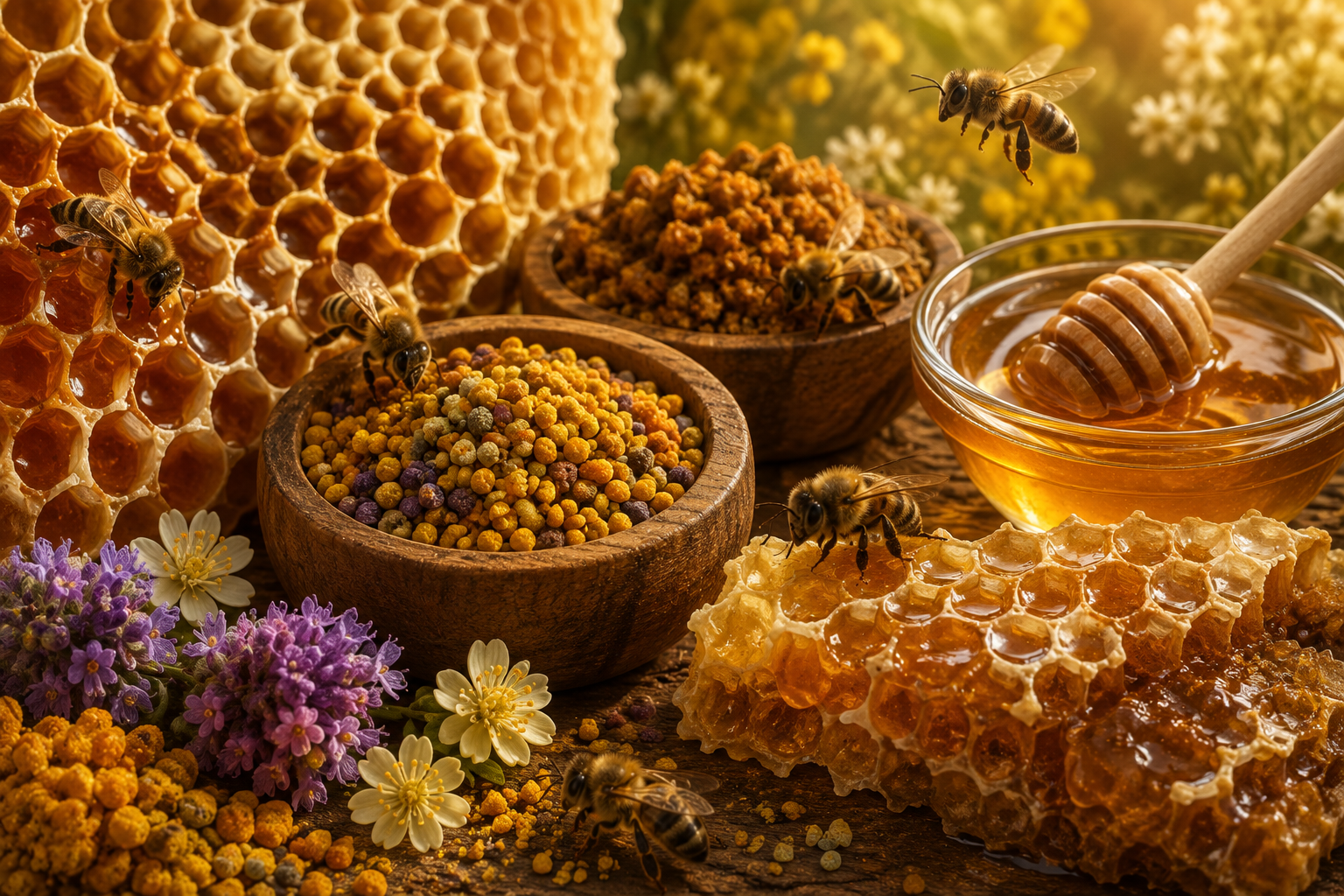
FUELLED BY THE LANDSCAPE
Pollen and nectar connect the bee gut to the flowering landscape. Diet changes what reaches the digestive tract and gives gut microbes different substrates to encounter and transform.
That relationship is dynamic. Age, season, task, forage availability and exposure can all coincide with changes in the gut community.
OBSERVE · ANALYSE · UNDERSTAND
Bee microbiome research combines community profiling with imaging, cultivation, chemistry and controlled experiments. Each method reveals a different layer of the same living system.
Explore MICROBA Research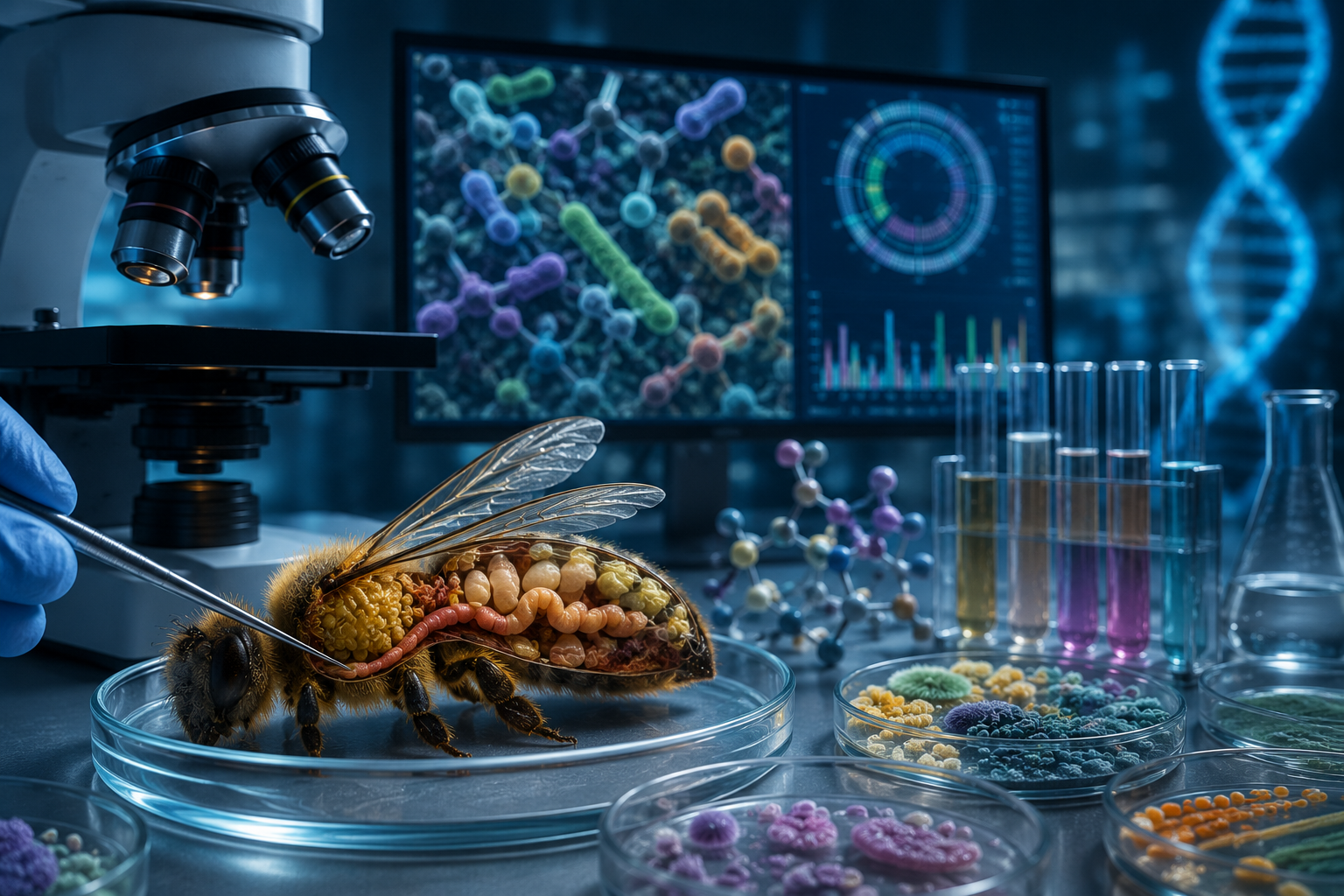
DNA-based methods help reveal which microbial lineages are present and how community composition changes across samples.
Imaging and cultivation help researchers observe spatial organization, cell morphology and specific microbial traits.
Experimental studies connect community composition with metabolism, diet, immune signalling and other measurable host responses.
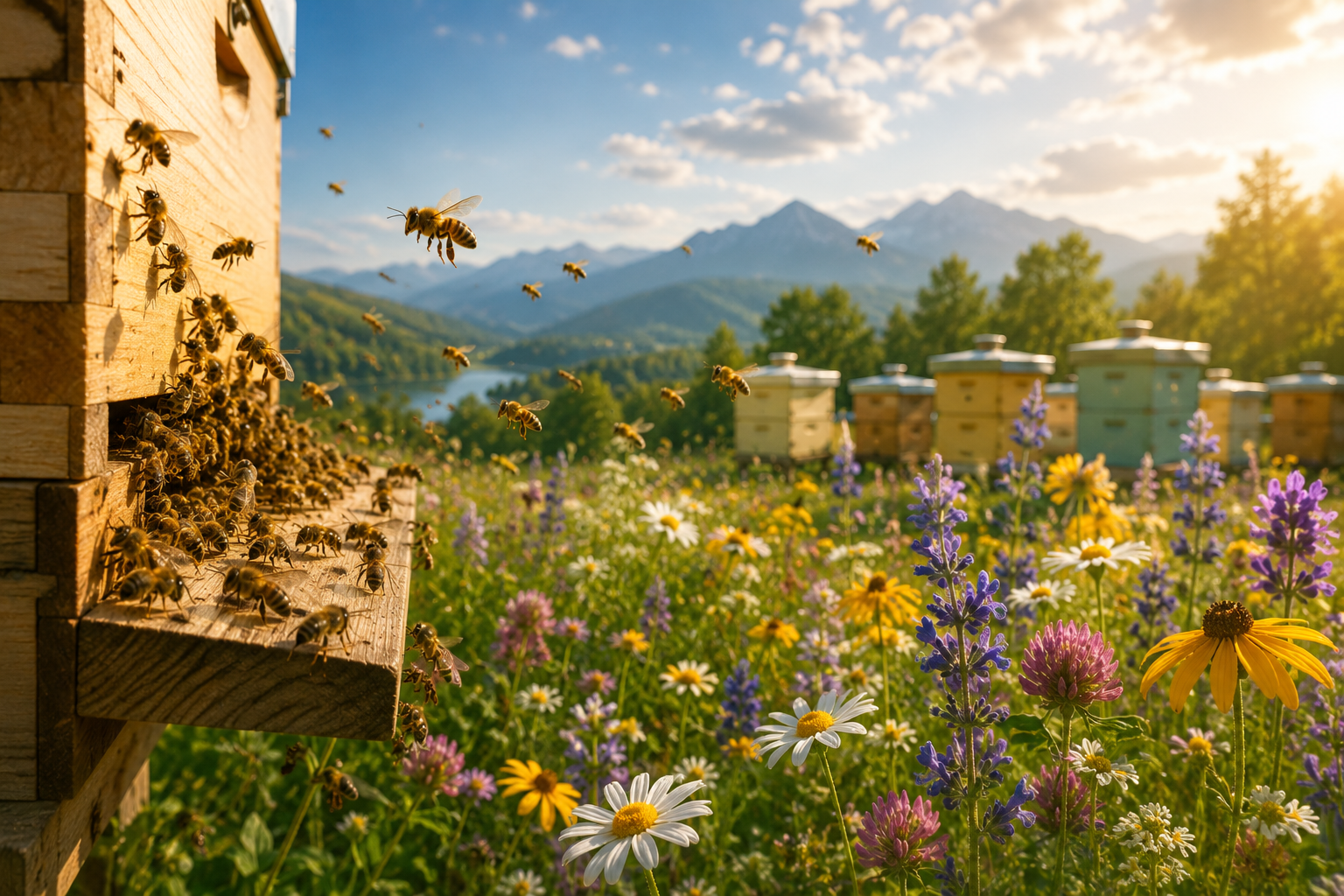
WHY IT MATTERS
A bee's microbiome is one layer within a wider living system. Understanding that layer may help research ask better questions about nutrition, resilience and environmental pressure.
Microbial communities interact with nutrition, metabolism, immune processes and other aspects of host physiology.
Adult bees acquire characteristic gut communities through life in and around the colony, making social context part of the microbial story.
Flowers, diet, season and environmental exposure connect individual gut ecology to the places where bees live and forage.
SMALL LIFE · MASSIVE CONNECTION
Continue through MICROBA Science to explore how observation becomes evidence and how living systems reveal their relationships.